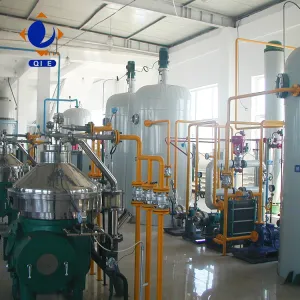
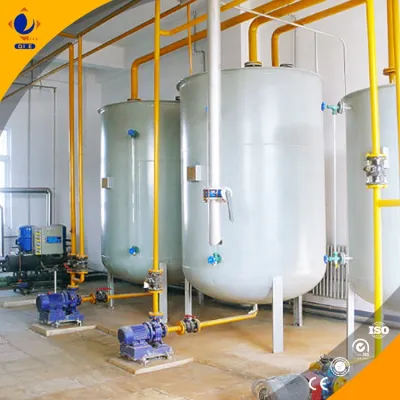
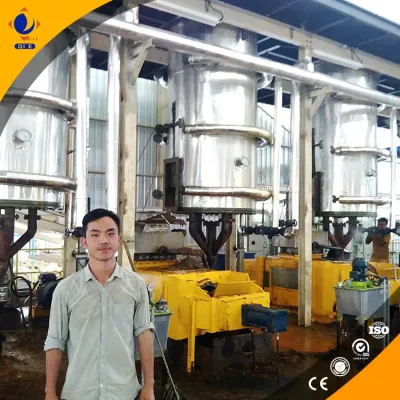
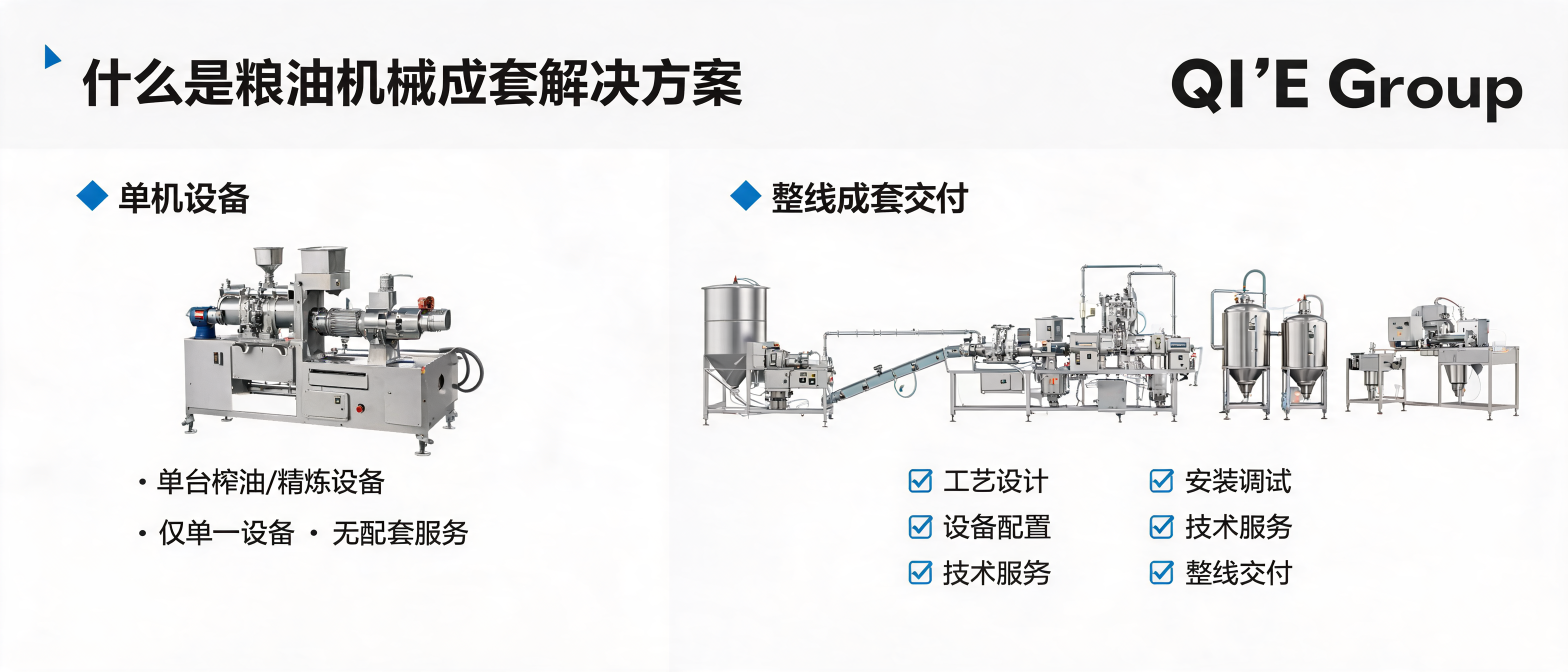
Grain and oil machinery refers to the equipment used to convert oil-bearing materials into processed edible oil through coordinated stages such as preparation, oil pressing, solvent extraction, and refining. For processors planning a new facility, expanding capacity, or upgrading an existing operation, the value of this machinery lies in how each process section works together as an integrated oil processing solution.
Qi'e Grain and Oil Machinery Co., Ltd. develops and supplies oil pressing equipment, oil production line equipment, and edible oil refining equipment for B2B processing applications. Its equipment portfolio supports projects ranging from individual processing units to connected production lines, including mini palm oil refining equipment for small and medium-sized palm oil operations.
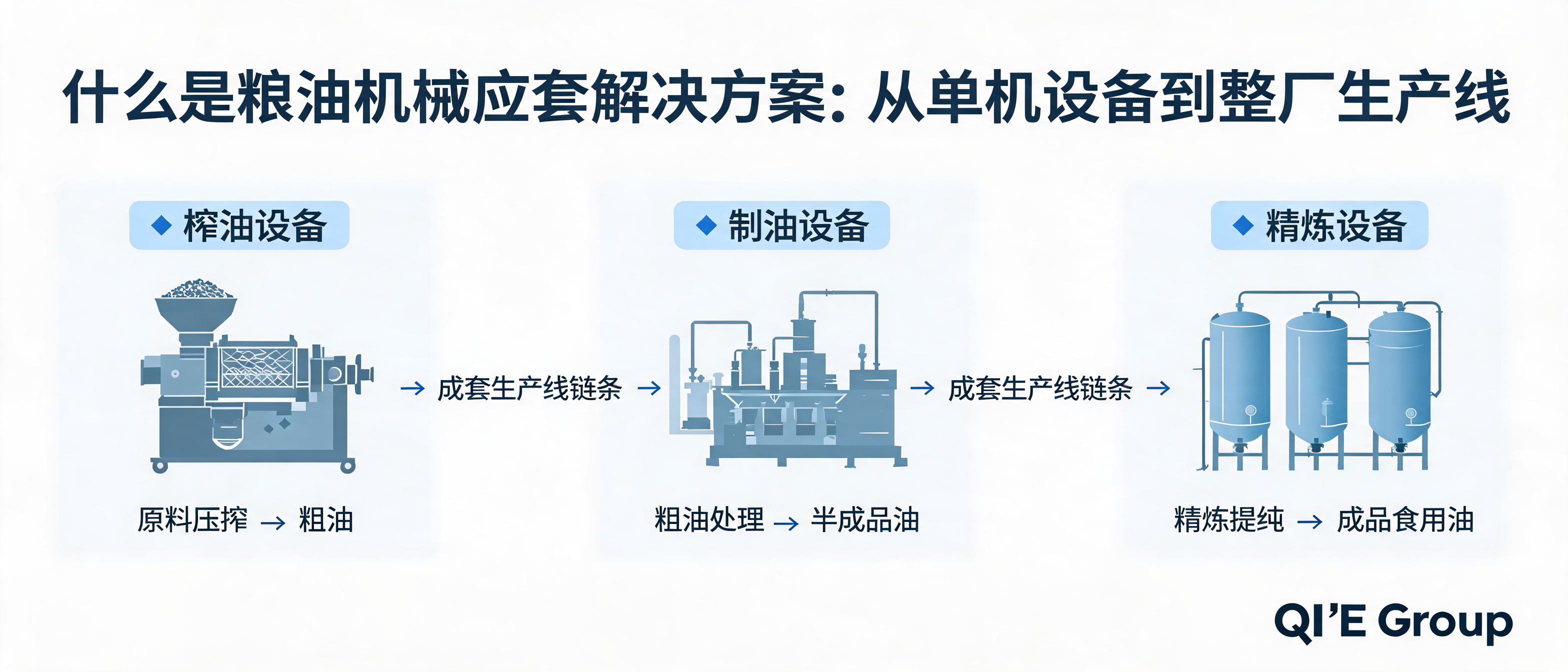
An edible oil processing line is not defined by one machine alone. It is a process arrangement in which material handling, oil recovery, purification, and finishing equipment are selected according to the raw material, intended product, production scale, and operating requirements. Depending on the project, an oil processing solution may include mechanical pressing, solvent extraction, refining, or a combination of these stages.
Oil pressing equipment mechanically extracts oil from prepared oilseeds or oil-bearing materials. It is a core part of many oil production lines and can be configured for different raw materials and plant scales.
Solvent extraction equipment is used in applicable processing arrangements to recover oil from materials after preparation or pressing. This section is typically considered as part of a wider production-line design.
Edible oil refining equipment treats crude oil through controlled refining steps to support the production of refined edible oil. Equipment selection should match the oil type, operating target, and required process capacity.
Mini palm oil refining equipment is a compact refining system designed for small and medium-sized palm oil production businesses. It is used to process crude palm oil within a more focused plant footprint while incorporating automated operating control and key refining-system components.
Qi'e Grain and Oil Machinery Co., Ltd. offers a mini palm oil refining equipment solution with a stated maximum processing capacity of up to 1,000 kg per hour. The system uses a PLC control system and is designed for operation by 2–3 personnel, helping operators manage the production process with a simplified control arrangement.
| Item | Specified Information | Operational Relevance |
|---|---|---|
| Processing capacity | Up to 1,000 kg/hour | Suitable for small and medium-sized palm oil refining operations. |
| Control method | PLC control system | Provides a centralized operating interface for the refining process. |
| Operating personnel | 2–3 people | Supports a compact staffing arrangement for the production process. |
| Steam consumption | Less than 300 kg/ton of oil | A key utility reference for project planning and operating assessment. |
| Soft water consumption | Approximately 160 kg/hour | Helps define site utility preparation requirements. |
| Power consumption | 22 kWh/ton of oil | Useful for evaluating electrical demand in a small-scale refining layout. |
A stable refining operation depends on the coordination of its mechanical, control, and process components. The mini palm oil refining equipment can be manufactured in carbon steel or stainless steel according to the applicable equipment configuration and project requirements.
The appropriate grain and oil machinery configuration should be evaluated as a processing system rather than as isolated equipment. Project planning should consider the following practical factors:
Qi'e Grain and Oil Machinery Co., Ltd. provides equipment and project support covering design, manufacturing, installation, and technical service for oil processing operations. Its mini palm oil refining equipment is part of a broader portfolio that includes oil pressing production lines, solvent extraction equipment, and edible oil refining systems.
For businesses developing or upgrading an edible oil processing operation, a clear review of raw materials, capacity objectives, utility conditions, and process requirements provides the foundation for selecting a suitable integrated solution.

 300
|
 Qi'e Grain and Oil Machinery Co., Ltd. emerging markets efficient and eco-friendly equipment grain and oil processing overseas procurement
 228
|
Qi'e Grain and Oil Machinery Co., Ltd. edible oil production line equipment selection capacity matching process route
424
|
Qi'e Grain and Oil Machinery Co., Ltd. oil press procurement parameters edible oil equipment evaluation oil processing equipment capacity oil press after-sales service
213
|
Qi'e Grain and Oil Machinery grain and oil machinery market regional demand trends equipment export overseas market expansion
 50
|
palm oil refining equipment component selection palm oil motor sizing continuous duty high temperature oil pump materials bearing fatigue life and lubrication PLC condition monitoring for refining equipment