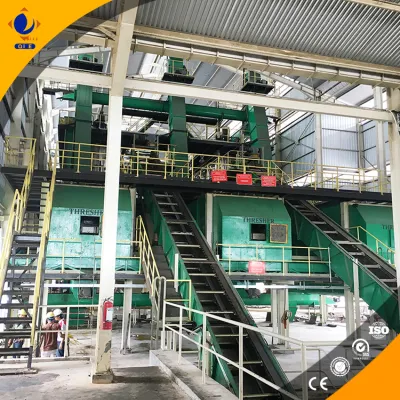
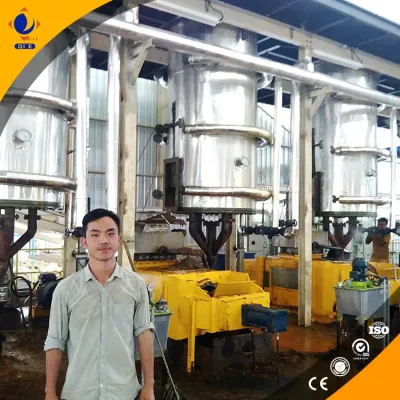
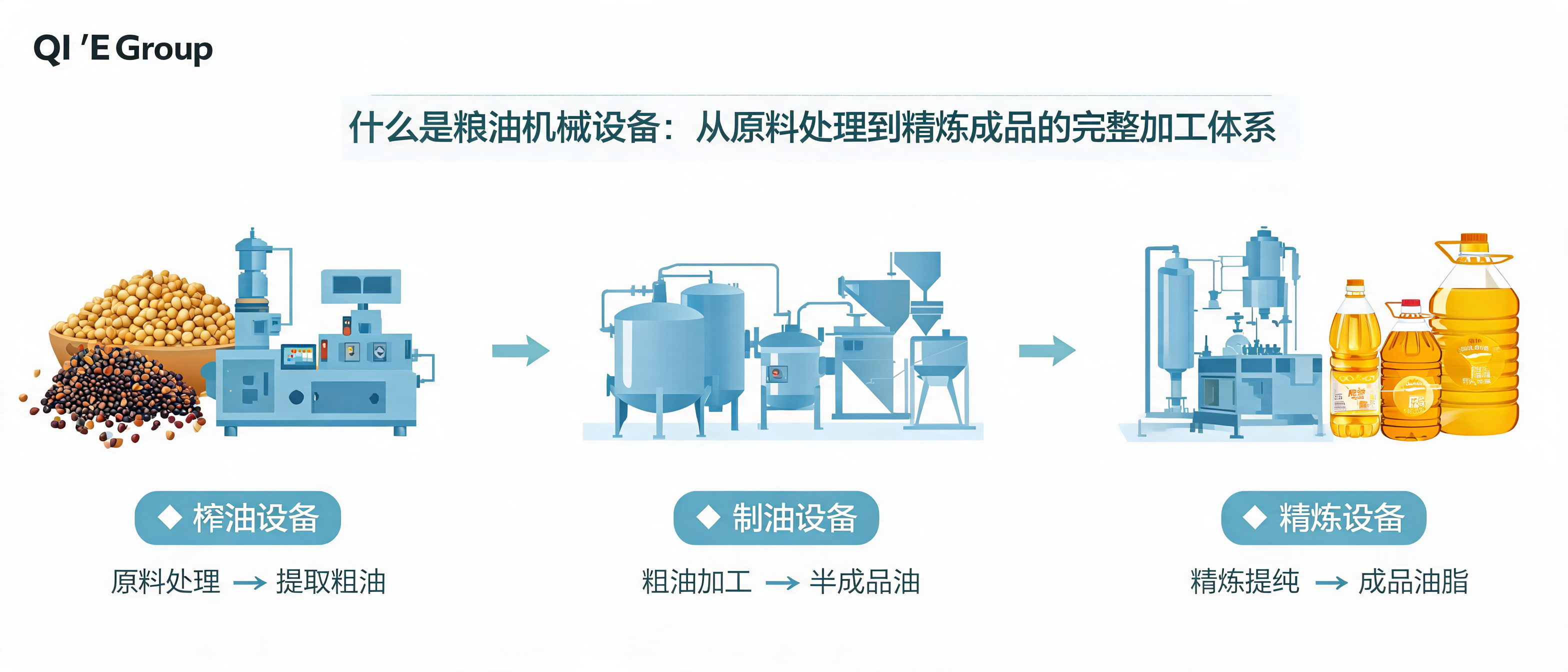
Edible oil production line equipment is a coordinated group of machines that converts oil-bearing materials into market-ready oil. Depending on the raw material and product target, the line can include oilseed pretreatment, oil pressing or solvent extraction, crude oil handling, edible oil refining, and finished oil output systems.
For processors, the value of an integrated line is not simply the presence of individual machines. Each stage should be selected and connected according to the oilseed type, required processing capacity, utility conditions, finished-oil standard, and destination-market requirements. Qi'e Grain and Oil Machinery Co., Ltd. supplies oil pressing, oil production line, and oil refining equipment for this production process.
An edible oil production line is typically arranged as a process flow. The specific configuration changes with materials such as soybean, palm fruit, palm kernel, sunflower seed, and other oilseeds, but the production logic remains clear: prepare the material, recover crude oil, condition the crude oil, refine it when required, and prepare the finished product for delivery or packaging.
Oilseeds or oil-bearing materials are prepared before oil recovery. The process may involve cleaning, sorting, moisture adjustment, size reduction, flaking, cooking, or other material-specific preparation steps.
Oil is separated from the prepared material through mechanical pressing or, where the process calls for it, solvent extraction. This stage produces crude oil and a solid residue or meal stream.
Crude oil is collected and managed before further processing. Proper handling supports stable transfer between oil recovery and refining operations.
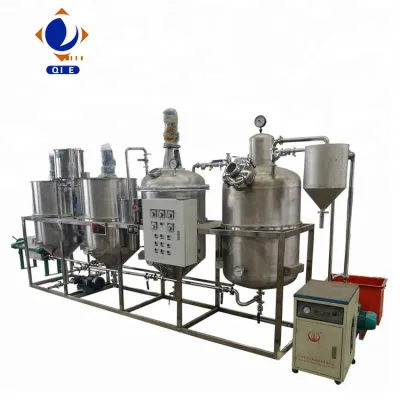
Refining equipment processes crude edible oil to support the required product quality and finished-oil specifications. The refining arrangement should match the oil type and the intended market.
After refining, finished oil is transferred to the next operational step, such as storage, filling, packaging, or distribution, according to the processor’s production plan.
A production line should be evaluated as a connected system rather than as isolated equipment. Pretreatment affects the condition of material entering pressing or extraction. The crude oil output from that stage becomes the input for oil handling and refining. Refining capacity, control arrangements, utility supply, and downstream handling should therefore be considered together during line planning.
The appropriate edible oil production line is determined by the relationship between raw material, capacity, process route, available utilities, product requirements, and local operating conditions.
Within the refining stage, the 1–50 TPD Small Palm Oil Refinery from Qi'e Grain and Oil Machinery Co., Ltd. is designed for palm oil processors with crude-oil refining requirements from 1 to 50 tonnes per day. It is intended for small and medium-sized production enterprises and farms, including applications relevant to the Nigerian palm oil market.
| Configuration Item | Available Product Information |
|---|---|
| Processing capacity | 1–50 tonnes of crude oil per day |
| Control system | PLC electrical control system for automated operation |
| Operating personnel | The complete production process can be operated by 2–3 people |
| Voltage range | 230V–430V, supporting different regional electrical standards |
| Steam consumption | Less than 300 kg per tonne of oil |
| Soft water consumption | Approximately 160 kg per hour |
| Support options | Custom logo, packaging, and graphic design options; two-year warranty for core components |
Utility consumption and configuration details should be reviewed against the actual process design and site conditions before project implementation.
Start with the material to be processed. Oilseed preparation, pressing, extraction, and refining needs vary by oil source and production method.
Capacity should be balanced across upstream and downstream stages so that pretreatment, oil recovery, refining, and finished-oil handling can work in sequence.
Electrical standards, water availability, steam requirements, and site infrastructure affect equipment selection and operational planning.
The target oil quality, customer expectations, packaging plan, and market requirements should guide the refining and finished-oil output configuration.
Qi'e Grain and Oil Machinery Co., Ltd. develops, manufactures, sells, and services grain and oil processing machinery, including oil pressing equipment, oil production line equipment, and edible oil refining equipment. For projects requiring a complete process route, equipment planning can be considered alongside design, installation, and technical service needs.
For a palm oil refining project or a broader edible oil production line, provide the raw material, planned capacity, available voltage, site utility conditions, and target finished-oil requirements. These details help define a suitable equipment configuration and a practical connection between oil processing and refining stages.

 255
|
 Palm Oil Refining Technology Steam Heating Deodorization Refining Process Optimization Automation Refining Equipment Palm Oil Processing Efficiency
 77
|
Qi'e Grain and Oil Machinery Co., Ltd. edible oil project delivery oil processing equipment installation and commissioning complete oil processing solution oil mill technical service
356
|
Qi'e Grain and Oil Machinery Co., Ltd. automatic oil press oil press procurement small oil mill oil press technical parameters
 79
|
small palm oil refining equipment batch refining process energy saving high-efficiency motor and gearbox optimization palm oil refining energy efficiency refinery heat recovery and insulation
 48
|
plant oil fractionation equipment selection cooling crystallization process centrifugal separation technology solvent recovery system fractionation troubleshooting