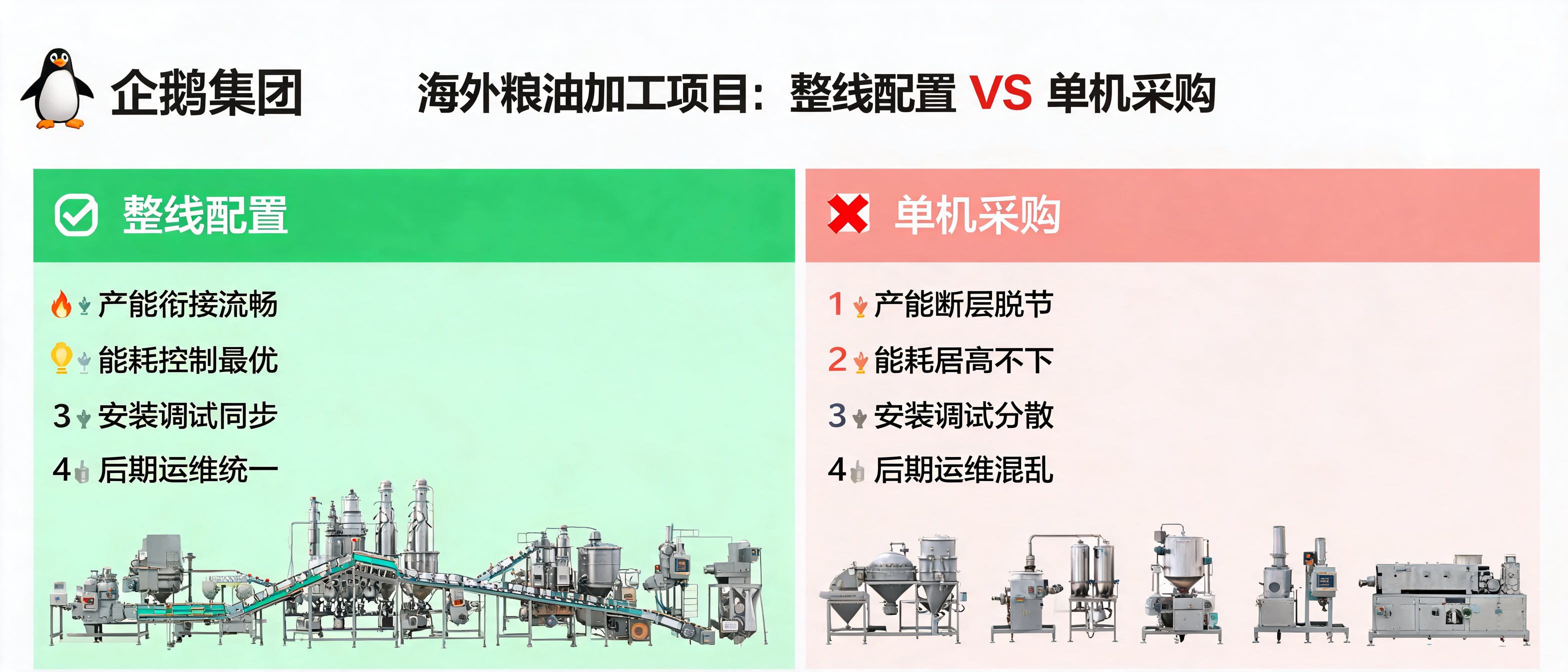
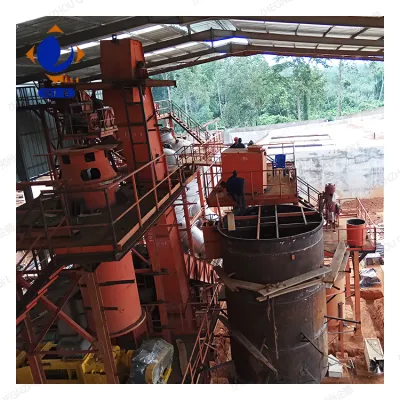
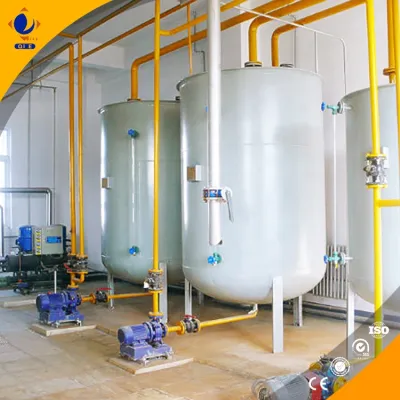
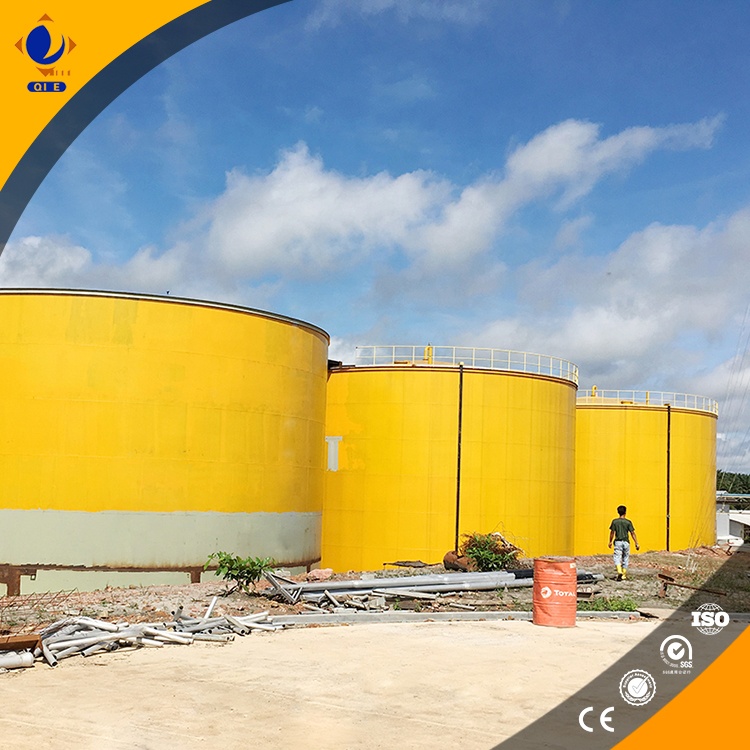
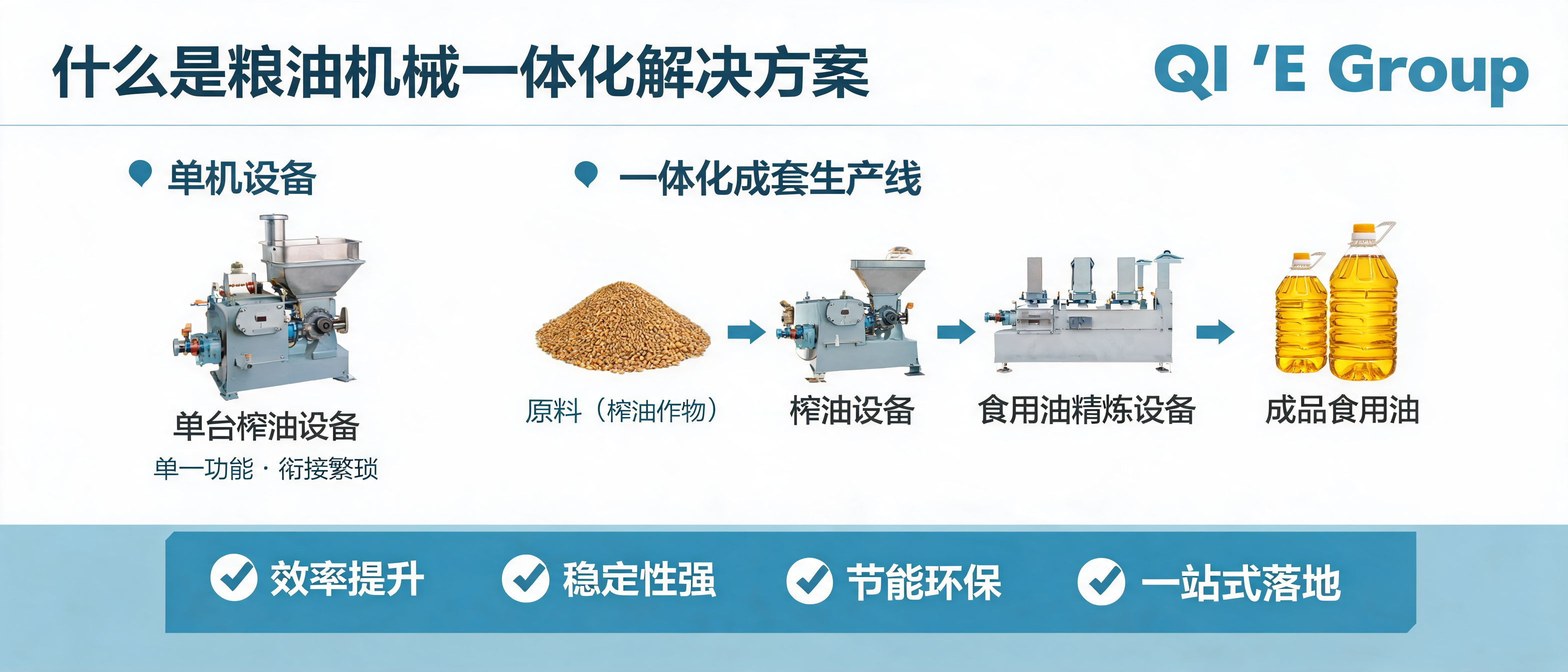
An edible oil production line is an integrated processing system designed to convert oil-bearing seeds or kernels into market-ready edible oil. Rather than being a single machine, it connects a sequence of processing stages: oilseed pretreatment, mechanical pressing or solvent extraction, crude oil treatment, edible oil refining, and finished oil handling.
The right configuration depends on the oilseed being processed, required throughput, intended oil quality, available utilities, and the operational requirements of the oil processing business. Qi'e Grain and Oil Machinery Co., Ltd. supports oil processing projects with equipment and system solutions covering these interconnected stages.
Oilseeds contain oil within their cellular structure. A production line prepares the raw material, releases and separates the oil, removes process-related impurities, and conditions the refined oil for storage, packaging, or further distribution. The process route may differ by material and project objective, but the production logic remains consistent: prepare, extract, purify, refine, and handle the finished oil.
Pretreatment prepares incoming oilseeds or kernels for oil recovery. Depending on the raw material and process route, this section may include cleaning, removal of unwanted materials, size reduction, conditioning, flaking, cooking, dehulling, or other preparation operations. Effective pretreatment helps create suitable conditions for pressing or extraction and supports more consistent operation across the line.
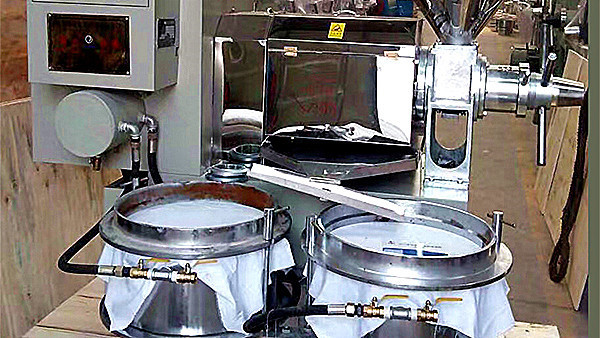
The extraction section is where oil is separated from prepared material. Oil pressing equipment uses mechanical force to recover oil, while solvent extraction is commonly considered where a project requires an extraction-based processing route. Some oil processing businesses use a combined approach, with pressing followed by extraction, according to the characteristics of the oilseed and project requirements.
Oil obtained from pressing or extraction is crude oil and generally requires further treatment before it becomes refined edible oil. This part of the system focuses on handling the crude oil stream and preparing it for the next processing stage. The exact treatment arrangement should align with the selected extraction method, raw material condition, and target product specification.
The edible oil refining section further processes crude oil to support the desired quality and use requirements. After refining, finished oil handling may include transfer, storage, and preparation for packaging or distribution. Refining and finished oil handling should be planned as part of the overall line rather than as isolated equipment choices, because upstream material quality and process conditions influence downstream operation.
An edible oil production line should be designed around process requirements, not simply assembled from individual machines. During project planning, the following factors help determine a suitable system configuration:
| Planning Factor | Why It Matters |
|---|---|
| Oilseed type | Different oilseeds and kernels require different preparation, extraction, and refining considerations. |
| Processing capacity | Capacity affects equipment selection, material flow, utility planning, and the scale of supporting systems. |
| Extraction route | The choice of pressing, extraction, or a combined route shapes the overall process layout. |
| Target oil quality | The intended finished-oil specification guides refining and final handling requirements. |
| Project conditions | Plant layout, local utilities, operating practices, and installation requirements should be considered from the beginning. |
Edible oil production systems can be planned for a range of oil-bearing raw materials and business models. The process design should always be matched to the material being processed and the intended output.
For a reliable project plan, each stage of the edible oil production line should be evaluated in relation to the next. Raw material preparation influences extraction performance; crude oil conditions influence refining requirements; and refining output affects storage and finished oil handling arrangements.
Qi'e Grain and Oil Machinery provides oil pressing equipment, oil production line equipment, and edible oil refining equipment for B2B processing projects. By considering the full process path—from oilseed pretreatment through finished oil handling—project owners can make more informed decisions about equipment selection, installation planning, and technical service requirements.

 269
|
269
|
 Qi'e Grain and Oil Machinery Co., Ltd.
industry trends
energy-efficient equipment
eco-friendly machinery
automation
integrated production lines
211
|
Qi'e Grain and Oil Machinery
grain and oil machinery market
regional demand trends
equipment export
overseas market expansion
Qi'e Grain and Oil Machinery Co., Ltd.
industry trends
energy-efficient equipment
eco-friendly machinery
automation
integrated production lines
211
|
Qi'e Grain and Oil Machinery
grain and oil machinery market
regional demand trends
equipment export
overseas market expansion
 46
|
plant oil fractionation equipment selection
cooling crystallization process
centrifugal separation technology
solvent recovery system
fractionation troubleshooting
477
|
Qi'e Grain and Oil Machinery
export case
overseas delivery
stable production start-up
technical service
46
|
plant oil fractionation equipment selection
cooling crystallization process
centrifugal separation technology
solvent recovery system
fractionation troubleshooting
477
|
Qi'e Grain and Oil Machinery
export case
overseas delivery
stable production start-up
technical service
 182
|
palm oil refining PLC control
PLC automation for edible oil refinery
temperature pressure flow control system
closed-loop process control
smart factory palm oil refining
182
|
palm oil refining PLC control
PLC automation for edible oil refinery
temperature pressure flow control system
closed-loop process control
smart factory palm oil refining