Small-Scale Palm Oil Refining Process: Full Workflow to Boost Yield and Product Quality
2026-04-03
QI ' E Group
Technical knowledge
This article provides a practical, step-by-step breakdown of the small-scale palm oil refining process—from raw material pretreatment and key parameter control to bleaching and deodorization best practices. It focuses on proven methods to increase oil yield, stabilize output, and meet consistent quality targets. Common operational challenges such as residual color, persistent odors, and low throughput are analyzed by root cause, with actionable solutions covering process settings, equipment coordination, and daily maintenance routines. It also highlights emerging refinement trends and upgrade paths, and outlines how Penguin Group’s technical support for small-scale refining equipment helps producers optimize operations, reduce energy waste, and maintain reliable long-term performance. Readers are invited to request a tailored process plan or book a free refining process diagnosis.
Small-Scale Palm Oil Refining: A Practical End-to-End Process Guide to Higher Yield & Stable Quality
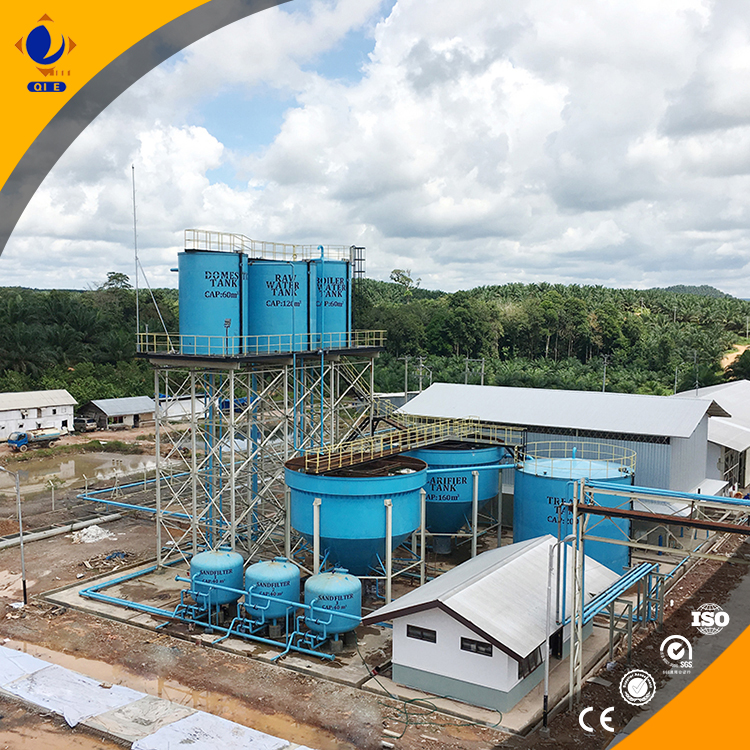
For small and mid-size palm oil plants, refining is often where profits are made—or quietly lost. The biggest gaps typically show up as persistent color, hard-to-remove odors, neutral oil loss, or low throughput. This article maps the full small-scale palm oil refining workflow and highlights control points that materially improve yield, energy efficiency, and product consistency, in a way production managers can apply immediately.
What “Good” Looks Like (Operational Targets)
While final specs differ by market and application, many small refineries aim for: FFA ≤ 0.10%, moisture & impurities ≤ 0.10%, and consistent color/odor. In practice, a well-controlled small refining line often achieves ~96–98% neutral oil yield from crude palm oil (CPO), depending on FFA, gums, and process discipline.
Typical Pain Points in Small Lines
Color doesn’t drop even with more bleaching earth (costly, unstable)
Odor remains after deodorization (vacuum/steam mismatch)
High oil loss in soapstock or spent earth (hidden yield killers)
Capacity bottlenecks due to heat transfer limits and fouling
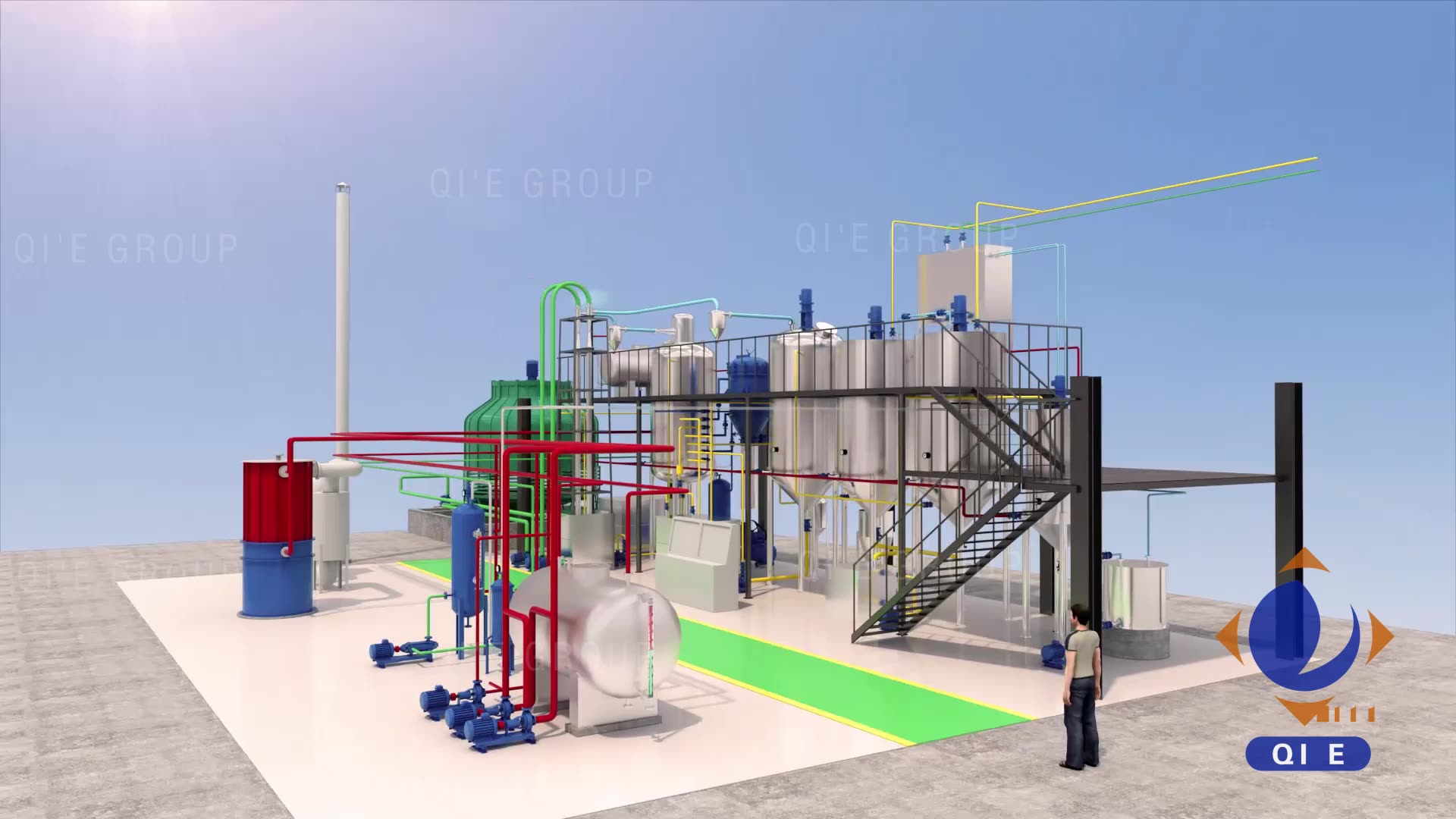
Process Flow (From Crude to Refined): The Small-Scale Refining Roadmap
Stage 1 — Feedstock Pretreatment (The “Invisible” Quality Lever)
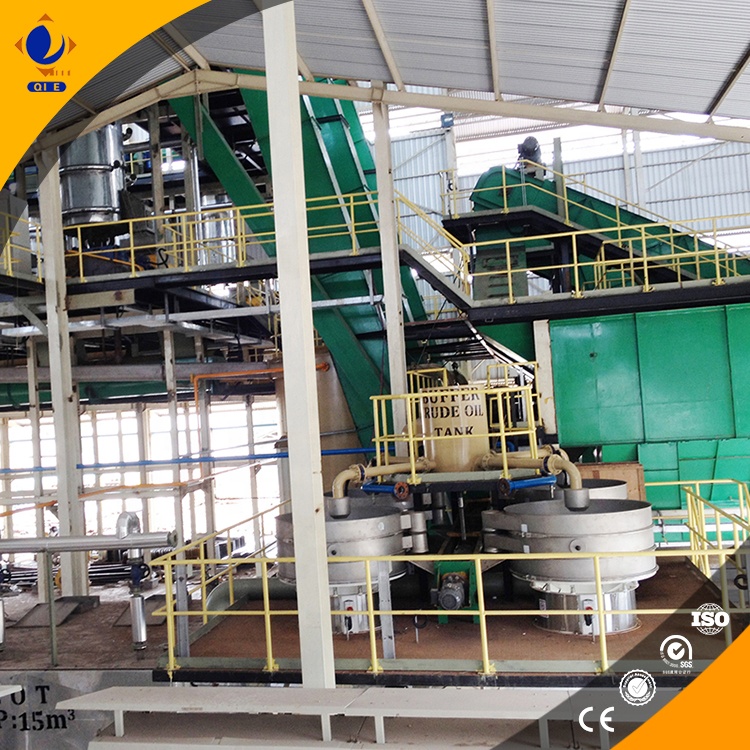
Stable refining begins with stable crude oil. For small plants, pretreatment is often simplified, but the fundamentals still matter: remove water, settle solids, and control temperature before chemical steps. A practical target is to reduce suspended impurities to avoid downstream fouling and to prevent unnecessary bleaching earth consumption later.
Operationally, keep an eye on inlet moisture and tank residence time. Too much water increases hydrolysis risk, pushing FFA upward. Too much sludge raises filter pressure and causes off-notes to persist after deodorization.
Even if the line runs a simplified physical refining route, conditioning is where operators either “set up” the oil for easy color removal—or create a problem that no deodorizer can fix. The goal is to reduce phosphatides/gums and metal traces that catalyze oxidation and lock in color.
A common small-plant mistake is chasing speed over stability: insufficient mixing/contact time makes the process look fast, but it pushes the burden into bleaching and deodorization, where costs and oil losses are higher.
Stage 3 — Neutralization (If Applicable): Control Oil Loss, Not Only FFA
For lines using chemical neutralization, the best operators track two numbers side-by-side: final FFA and neutral oil loss. Over-dosing alkali reduces FFA quickly but increases soapstock, taking sellable oil with it. Under-dosing can leave FFA too high and lead to odor stability issues later.
In many small plants, a realistic improvement opportunity is reducing avoidable losses by 0.3–0.8% through tighter dosing control, better mixing, and more consistent separation conditions—small numbers that add up over months.
Stage 4 — Bleaching (Where Color, Metals, and Stability Get Decided)
Bleaching is not just “add more earth.” It is a controlled adsorption step balancing temperature, vacuum, contact time, and filtration quality. When color remains high, the root cause is frequently upstream (gums/metals/oxidation), not the earth itself.
Ignoring filter cloth condition and cake formation
Stage 5 — Deodorization (Odor Removal Is a Vacuum & Steam Story)
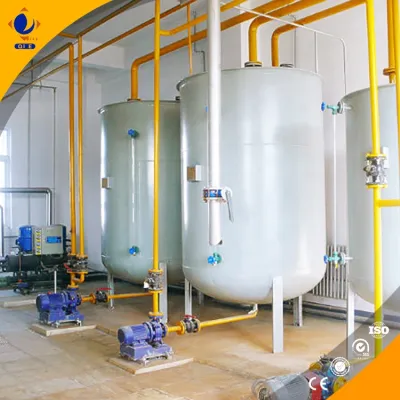
If the plant is fighting “odor that won’t go away,” the deodorizer is usually blamed first. In reality, deodorization works best when it is treated as an integrated system: vacuum stability, steam quality, heat exchange efficiency, and residence time have to match the oil’s actual condition.
For small-scale units, the most frequent bottleneck is vacuum performance. A small leak, inconsistent condenser cooling, or poor non-condensable gas removal can reduce effective stripping dramatically. When vacuum drifts, operators often raise temperature to compensate—risking thermal degradation, darker color, and a shorter shelf life.
Stage 6 — Final Polishing: Cooling, Filtration, and Storage Discipline
A refined oil can still fail customer expectations if storage and transfer are neglected. Exposure to oxygen, residual water, or dirty lines can bring back off-odors and haze. Many plants reduce complaints by standardizing closed transfer, controlling tank headspace, and verifying final filtration integrity.
Troubleshooting by Symptom: Root Causes & Fixes That Work in Small Plants
Symptom
Likely Root Cause
Field-Proven Corrective Action
Color remains high
Gums/metals not reduced; oxidation during heating; weak filtration
Improve conditioning stability; maintain vacuum during heating; standardize filter cloth/cake formation and monitor ΔP trends
Odor persists after deodorization
Vacuum leak; poor condenser cooling; steam quality mismatch; too short residence time
Schedule cleaning by performance drop (not calendar); upgrade filtration management; stabilize pretreatment and feed temperature window
Coordination of Core Components: The “System” Behind Stable Refining
Small lines are more sensitive to fluctuations because buffers are limited. That is why component coordination matters: heaters set the viscosity for filtration; filtration determines bleaching performance; vacuum quality determines deodorization efficiency; and storage discipline protects all previous work. In practice, plants that run steadily often standardize a daily verification routine across these three areas:
Vacuum & Steam
Record vacuum level stability (not just peak)
Confirm steam dryness/pressure consistency
Inspect condensers and non-condensables removal
Filtration Discipline
Monitor ΔP trend to catch early fouling
Standardize cloth inspection/replacement timing
Control cake formation for stable clarity
Heat Transfer & Cleaning
Track heat exchanger approach temperature
Trigger cleaning by performance drop
Reduce hot-hold time to limit oxidation
Technology Trends & Upgrade Ideas for Small Refineries
The small-scale market is moving toward higher automation in critical control loops and more energy-aware designs. Practical upgrades that tend to pay back through fewer complaints and lower losses include: better vacuum sealing practices, improved heat recovery design, more consistent filtration management, and instrumenting a handful of KPIs (vacuum stability, ΔP, inlet moisture, final FFA).
For teams that want faster stabilization, the simplest shift is often organizational: define one “golden batch” operating window and require every shift to log deviations. This reduces trial-and-error and makes root-cause analysis possible instead of guesswork.
How Penguin Group Supports Small Palm Oil Refining Lines (Without Disrupting Production)
Penguin Group focuses on small-scale refining scenarios where operators need repeatable quality and predictable throughput under real-world feed variability. Typical support includes process mapping for yield-loss points, operational parameter alignment across bleaching and deodorization, and equipment-side guidance that helps teams reduce color/odor risk while protecting neutral oil yield. If a plant is planning a retrofit or a new small line, the goal is to design for stable control rather than only theoretical capacity.
Ready to Improve Your Small Palm Oil Refining Performance?
Get a tailored plan to raise yield, reduce persistent color/odor issues, and stabilize day-to-day operation—based on your feed quality and current line constraints.
2026-01-07|361|palm oil pressing equipment steam cooking temperature optimization South America palm fruit preprocessing customized agricultural machinery efficient palm oil extraction
2026-01-08|404|palm fruit preprocessing equipment corrosion-resistant materials for agro-processing automatic control systems in oil palm mills extreme climate agricultural machinery palm oil processing optimization