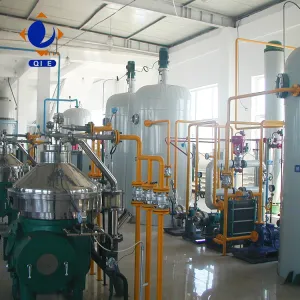
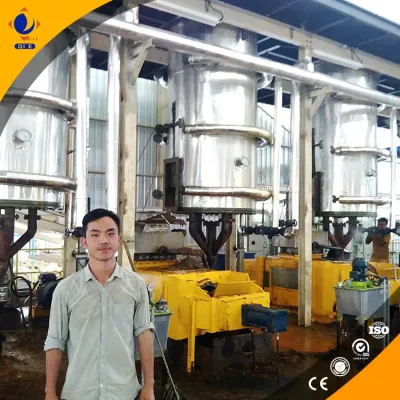
Reliable operation of a 1–50 TPD small palm oil refinery depends on consistent inspection, clean utility conditions, accurate PLC records, and safe response to abnormal conditions. This guide supports operators and maintenance teams working with Qi'e Group palm oil refining equipment for small and mid-sized processing facilities.
The equipment is designed for refining capacities from 1 to 50 tonnes of crude oil per day and may be configured with PLC electrical control, steam-based processing utilities, soft-water supply, and power compatibility within 230V–430V. Actual maintenance instructions, operating parameters, and component specifications should always follow the project documentation supplied with the equipment.
Routine maintenance is not only a mechanical task. In a palm oil refinery, product flow, heat transfer, steam supply, water condition, electrical controls, seals, and operator records are connected. A structured maintenance routine helps identify developing issues before they interrupt production or affect refining consistency.
Check tanks, pipelines, valves, filters, and accessible contact surfaces for oil residue, sediment, or restricted flow.
Monitor steam, soft water, and electrical supply conditions before and during operation; investigate unexpected variation promptly.
Record PLC alarms, resets, operating observations, and corrective actions so recurring faults can be assessed accurately.
| Inspection stage | What to check | Recommended response |
|---|---|---|
| Before start-up | Guarding, visible leakage, valve positions, pipeline connections, electrical enclosure condition, and PLC display status. | Do not start equipment if there is a damaged guard, exposed wiring, active leak, or unexplained control alarm. |
| During operation | Abnormal noise, vibration, temperature changes, pressure indications, flow stability, and seal condition. | Record abnormalities and follow the approved shutdown or adjustment procedure when safe operating limits may be affected. |
| After production | Residual material in designated process areas, filter condition, drainage condition, and housekeeping around the machine. | Clean according to the operating procedure and report components that require replacement or further inspection. |
| Planned maintenance | Lubrication points, fasteners, seals, motors, pumps, sensors, and utility connections. | Use the equipment-specific maintenance plan and only approved lubricants and replacement parts. |
The PLC control system is intended to support automated operation and process monitoring. An alarm is an operating signal that requires assessment; it should not be treated as a condition to bypass. Before resetting an alarm, operators should identify the displayed message, the time of occurrence, the equipment status, and any observed change in utilities or product flow.
| Observed symptom | Possible inspection focus | Safe action boundary |
|---|---|---|
| Reduced or unstable flow | Valve position, filter or strainer condition, visible pipeline obstruction, pump operating condition, and process temperature. | Stop and isolate before opening any process connection. Do not dismantle hot or pressurized lines. |
| Oil or utility leakage | Seals, flanges, joints, valves, hoses, and drainage points. | Contain the area where safe, stop equipment if necessary, and arrange inspection by trained maintenance personnel. |
| Unusual noise or vibration | Motor, pump, coupling, fastening points, bearings, and foundation condition. | Do not reach into moving machinery. Shut down using the correct procedure before mechanical examination. |
| Repeated PLC alarm | Alarm history, power supply stability, sensor condition, interlocks, and relevant utility or process status. | Do not repeatedly reset. Provide the alarm record to a qualified technician or Qi'e Group service contact. |
| Steam or heating irregularity | Steam supply condition, control valves, condensate path, insulation condition, and visible leakage. | Steam systems present burn and pressure hazards. Escalate adjustments or repairs to qualified personnel. |
Keep the refinery clean in accordance with the approved process and sanitation requirements for the installation. Remove accessible residue from designated areas after production, maintain clear walkways, and ensure that drainage paths are not obstructed. Cleaning agents and chemical-treatment materials must be handled according to their applicable safety instructions.
Operators should stop the affected equipment and request qualified technical support when a condition involves steam pressure, high temperature, chemical treatment, electrical faults, damaged safety devices, persistent alarms, structural damage, or an unknown cause of abnormal operation.
Qi'e Group can support customers with equipment-oriented technical communication, installation-related service coordination, and maintenance guidance for its 1–50 TPD small palm oil refinery solutions. For efficient diagnosis, prepare the equipment model, PLC alarm information, photographs or video of the observed condition, utility details, and a clear record of recent operating changes.
A simple operating log strengthens preventive maintenance. Record start and stop times, utility observations, cleaning completed, lubrication performed, alarms displayed, replacement parts used, and unresolved issues. Clear records help site teams make informed maintenance decisions and enable Qi'e Group technicians to provide more relevant support when assistance is required.

 329
|
 Qi'e Grain and Oil Machinery Co., Ltd. edible oil production line equipment oil pressing equipment edible oil refining equipment oil processing flow
 223
|
Qi'e Group edible oil processing plant planning oilseed processing equipment oil production line capacity oil pressing and refining process
153
|
Qi'e Grain and Oil Machinery Co., Ltd. integrated grain and oil processing solutions oil production line equipment oil pressing equipment edible oil refining equipment
 155
|
Qi'e Group edible oil production line equipment oilseed pretreatment equipment oil pressing equipment edible oil refining equipment
203
|
Qi'e Group complete grain and oil processing solutions oil pressing equipment edible oil refining equipment oil processing project