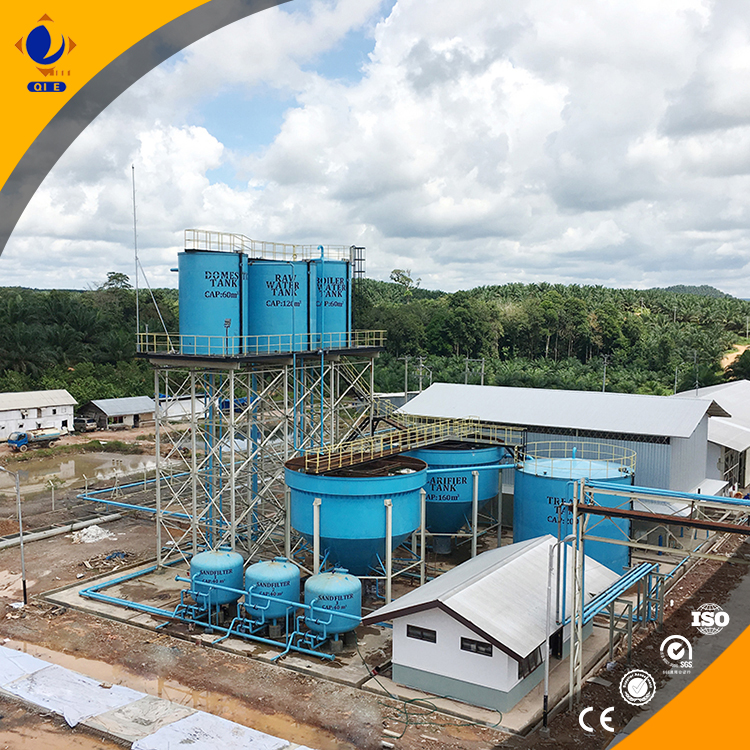
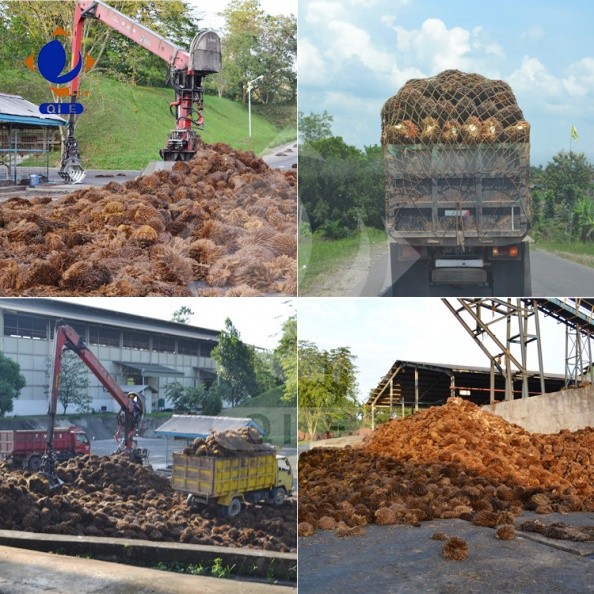
Physical Fractionation for Higher Palm Stearin Purity: What Actually Moves the Needle
In edible oil processing, “fractionation” often sounds like a single step. In practice, it is a chain of controllable micro-decisions—temperature ramps, residence time, agitation intensity, and (when needed) seeding—each shaping crystal size distribution and filtration behavior. When those parameters are tuned with discipline, processors can realistically target a +20% relative improvement in palm stearin purity in difficult campaigns (especially when the baseline is constrained by inconsistent crystallization), while also stabilizing yield and reducing rework. From lab to plant floor, this optimization playbook has been repeatedly validated as workable.
1) Why Physical Fractionation Is the Core Lever for Palm Stearin Purity
Physical fractionation separates an oil into a higher-melting fraction (stearin) and a lower-melting fraction (olein) by controlled crystallization followed by solid–liquid separation (typically membrane filter press or rotary vacuum filtration). For palm oil, the goal is not only “more solids,” but cleaner solids: a stearin phase enriched in high-melting triacylglycerols (TAGs) and depleted of entrained olein.
In operational terms, palm stearin purity is governed by two dominant mechanisms:
- Selective crystallization (which TAGs nucleate and grow at each temperature)
- Separation efficiency (how well the formed crystal network releases liquid olein during filtration)
Miss either mechanism and the plant gets a common outcome: “hard” stearin that still carries too much liquid oil, causing spec failures in slip point, SFC curve, or downstream functionality (margarine/bakery fat texture, confectionery stability, etc.).
2) The Process, Explained Like a Production Shift (Not a Textbook)
Step A — Feed conditioning: start with what you can control
Before the first cooling step, the feed’s thermal and compositional history matters. Palm oil that experienced uncontrolled cooling in storage can carry “memory crystals,” which can skew nucleation and produce mixed crystal populations. A practical plant rule is: fully melt and homogenize the oil above its last crystal melting point, then hold long enough to erase crystal history (commonly 60–80°C for 30–60 minutes, depending on tank size, heat transfer, and turnover).
Step B — Controlled crystallization: temperature profile is strategy
The highest leverage knob is not simply “cool lower.” It is the cooling curve: how fast the oil moves through nucleation and growth zones. For palm oil, aggressive cooling can create many fine crystals, increasing surface area and trapping olein—often lowering apparent stearin purity even if solids content rises.
Many plants find stability by using a staged program: an initial controlled nucleation window, then slower growth, followed by a maturation hold. In common industrial ranges, crystallization may target 18–25°C depending on desired cut and product specs. The exact setpoints should be validated with SFC and filtration response rather than copied from another refinery.
Step C — Residence time & maturation: where purity is “earned”
After reaching target temperature, stearin purity often improves during maturation (also called crystal ripening). Over time, crystals reorganize, grow, and form a more permeable network—helping olein drain during filtration. Typical total crystallization + maturation time in physical fractionation lines can fall in the 4–12 hour range, with wide variation by equipment, agitation, and feed variability.
A reliable operator signal is filtration behavior: when the cake compresses too early or filtrate turns cloudy, the crystal population is usually too fine or too heterogeneous—often pointing back to a cooling rate problem or insufficient maturation.
Step D — Filtration: separation is not a “last step,” it is half the process
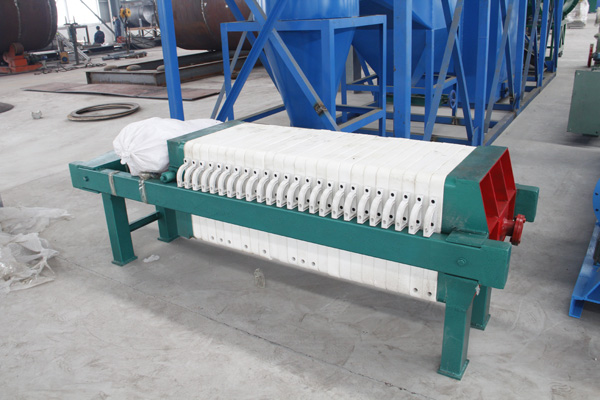
The best crystallization program can still fail if filtration conditions squeeze liquid into the cake or rupture the crystal network. For membrane filter presses, many plants stabilize results by standardizing:
- Feed temperature at press inlet (avoid drift that changes viscosity and drainage)
- Pressing pressure ramp (too fast = cake sealing, slower ramp = better drainage)
- Cycle time and cloth condition (blinding often mimics “bad crystallization”)
If stearin purity targets are consistently missed, it is worth treating filtration KPIs as primary metrics: specific filtration rate, cake moisture/liquid content proxy, and filtrate clarity.
Standards & Methods (Reference Box)
For data-driven fractionation control, many plants align internal QC with recognized methods:
- AOCS methods for melting characteristics, cloud point, and solid fat content (SFC, typically by NMR)
- ISO frameworks for sampling, reproducibility, and fat/oil property determination used in edible oil QA systems
3) The Three Parameters That Most Influence Palm Stearin Purity
(1) Crystallization temperature: choose the cut, then prove it with SFC
Lower temperature generally increases solids, but can reduce purity if it creates a dense, fine-crystal matrix that traps olein. A pragmatic approach is to select a temperature window that matches the target SFC curve and filtration response, then keep it tight with automated control (±0.3–0.5°C can matter at scale).
(2) Residence time: longer is not always better—uniformity is
Extending maturation often improves drainage up to a point, but excessive time can cause crystal interlocking that raises filtration resistance. The plant goal is repeatable crystal size distribution. Many refineries converge on a “sweet spot” where filtration time stabilizes and stearin specs stop drifting between batches.
(3) Seeding (crystal inoculation): a precision tool, not a habit
Seeding can reduce batch-to-batch variability by guiding nucleation and limiting random crystal forms, particularly when feedstock quality swings. However, over-seeding can generate too many nuclei, producing fines that hurt filtration and raise olein entrapment.
Plants that successfully use seeding tend to standardize: seed type, dose, addition temperature, and mixing time—treating it like a recipe rather than an operator “fix.”
4) Palm Oil vs. Rapeseed Oil: Why One Recipe Never Fits All
A frequent mistake in multi-oil plants is applying a palm fractionation program to other oils—or assuming that rapeseed behaves like a “lighter palm.” The underlying TAG profile and wax content change nucleation behavior and crystal morphology.
| Dimension |
Palm Oil (typical fractionation focus) |
Rapeseed Oil (common challenges) |
| Crystallization behavior |
Strong tendency to form solid network in practical temperature windows |
Often softer, slower crystallization; wax-related hazes can dominate “clarity” issues |
| Main quality target |
Stearin purity (melting profile, SFC curve, functional hardness) |
Winterization/clarity and stability at low temperature (depending on end use) |
| Separation sensitivity |
High—fine crystals can trap olein and reduce purity |
High—small wax crystals can blind filtration media quickly |
| Best practice |
Optimize cooling ramp + maturation to balance purity and yield |
Match program to wax/SFC targets and emphasize filtration hygiene |
The operational takeaway is simple: process parameters must match oil chemistry. When a plant standardizes “one program,” it often forces operators to compensate with ad-hoc fixes (extra time, higher pressure, emergency recirculation), which typically increases losses and variability.
5) Common Production Problems (Root Causes + Fixes)
Problem A: Non-uniform crystallization (hot spots / mixed crystals)
Likely causes: poor tank mixing at low viscosity transitions, uneven heat transfer, temperature probe placement, residual “memory crystals.”
Fixes: verify probe calibration and location; standardize melt/hold reset; adjust agitation strategy to maintain uniform temperature without breaking crystals; validate cooling curve with in-tank temperature mapping.
Problem B: Low stearin purity (spec misses despite “enough solids”)
Likely causes: crystals too fine; insufficient maturation; filtration pressure ramp too aggressive; cloth blinding; feed temperature drift.
Fixes: slow the cooling through nucleation zone; add/extend maturation hold; standardize pressure ramp; schedule cloth cleaning based on ΔP trend, not calendar; lock inlet temperature control.
Problem C: Low yield / excessive olein losses in cake
Likely causes: cake sealing from fast pressurization; over-crystallization leading to dense network; short cycle with incomplete drainage.
Fixes: optimize pressure ramp and cycle endpoints; aim for permeable crystal network (not maximum solids); use filtration KPIs to decide cycle end; review cake handling to prevent re-absorption.

6) A Data-Driven Optimization Routine (Simple Enough to Standardize)
Teams that consistently improve palm stearin purity tend to run fractionation like a controlled experiment—without turning the plant into a laboratory. A practical routine is:
Infographic-style process map (text description)
- Define product target: required slip point / SFC checkpoints (e.g., SFC at 10°C, 20°C, 30°C) + filtration capacity constraint.
- Lock what must not drift: melt reset protocol; crystallizer fill level; probe calibration; inlet temperature to filter.
- Change one variable per campaign: cooling rate through nucleation zone, or maturation hold, or seed dose—never all at once.
- Measure in a closed loop: SFC curve, filtrate clarity, cycle time, specific filtration rate, and stearin spec compliance.
- Standardize the winner: convert into an SOP with setpoints, allowable ranges, and operator decision triggers.
With disciplined control, many processors see meaningful outcomes within 2–6 weeks (one to three iteration cycles): fewer off-spec lots, smoother filtration, and more stable stearin functionality. The exact gains depend on equipment and feed variability, but consistency itself often becomes a competitive advantage.
7) Two Questions for Your Team (Share Your Scenario)
Q1: When purity drops, is the first symptom seen in SFC/spec or in filtration behavior (ΔP rise, cloudy filtrate, shortened cycle)?
Q2: Which factor varies most in your plant—feedstock blend, cooling stability, or filter media condition?
Make “20%+ Higher Palm Stearin Purity” a Repeatable SOP
Penguin Group supports edible oil processors with practical, plant-ready fractionation improvement—turning temperature profiles, maturation strategy, and filtration discipline into measurable purity gains and lower losses.
Get the Palm Oil Physical Fractionation Optimization Plan
Typical inputs: target specs (SFC/slip point), current cooling curve, filtration cycle data, and feed blend notes.