Automating palm kernel oil extraction is not simply a matter of adding a control panel. A useful equipment evaluation examines how temperature, pressure, material flow and quality testing work together—and how operators respond when production conditions change.
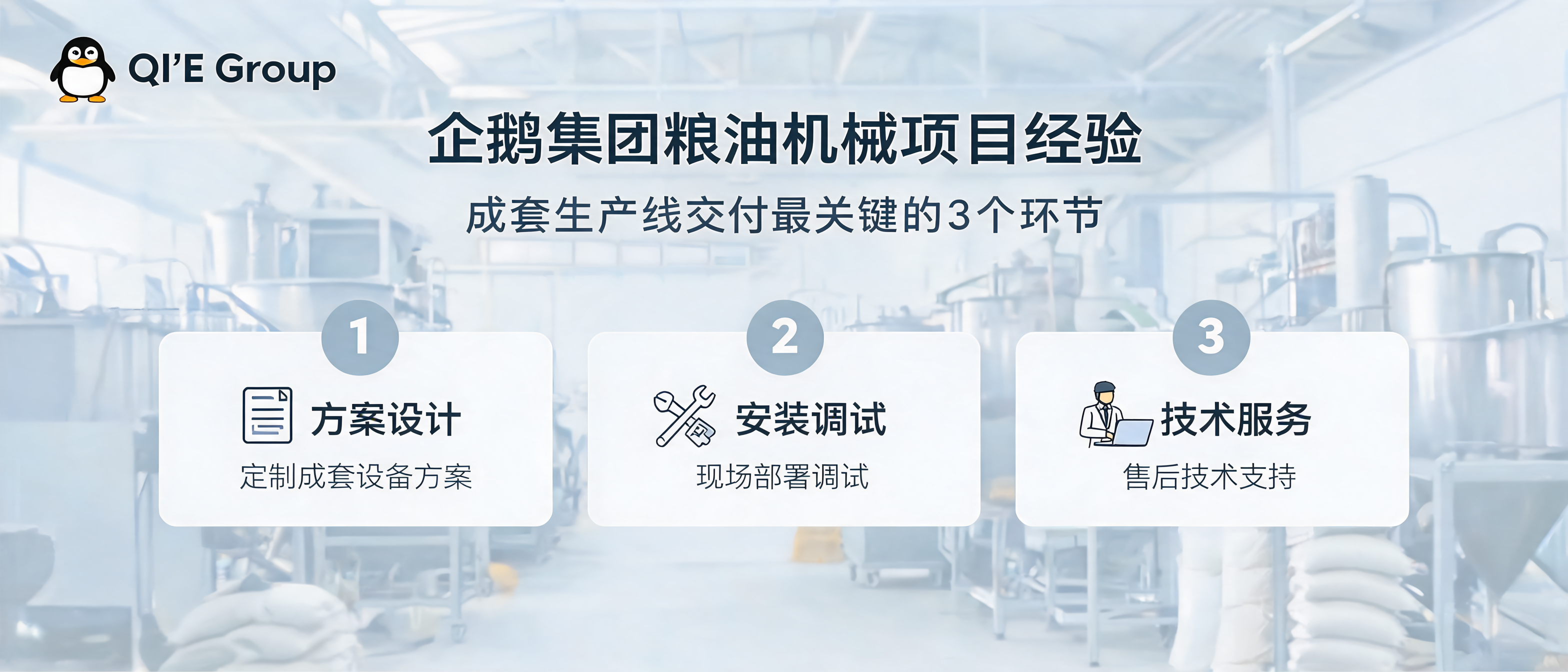
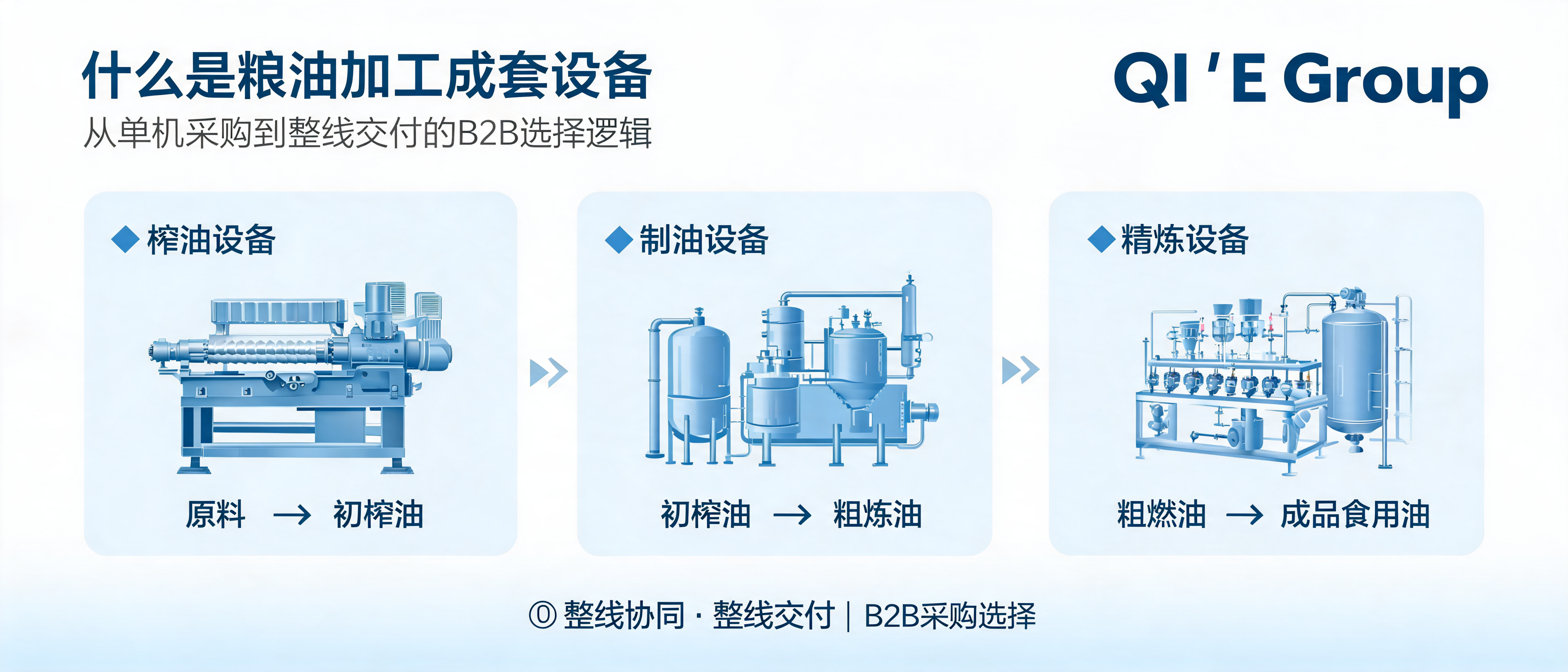
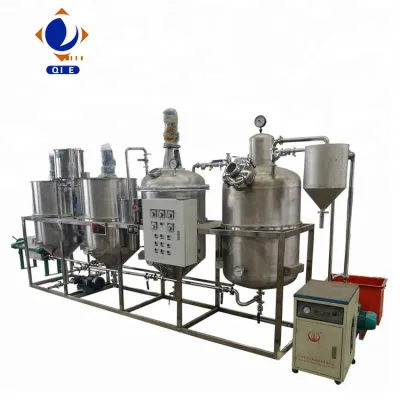
Qi'e Grain and Oil Machinery Co., Ltd. supplies palm kernel oil extraction and refining equipment with automated control systems, supported by equipment design, installation and technical services. Its stated capacity range is 5–500 tonnes per day; buyers should confirm the throughput basis and configuration for their intended extraction and refining process.
Evaluation principle: Assess automation by its control accuracy, process visibility, safety provisions and maintainability—not by a single residual oil figure or the description “fully automatic.”
Palm kernel oil is obtained from the kernel, rather than the fruit flesh used to produce palm oil. Equipment selection should therefore start with the actual feedstock, its preparation requirements and the chosen extraction route.
Mechanical pressing, solvent extraction and refining have different control requirements. Solvent consumption is relevant to a solvent-based process, while residual oil in cake or meal measures extraction performance. Refining evaluates the crude oil and the required finished-oil quality; it should not be judged by the same residual oil metric.
A temperature or pressure reading alone does not establish effective automation. Buyers should examine the full control loop: the measurement point, the operating setpoint, the control response and the action taken when a limit is exceeded. Specific operating ranges depend on the process and should be agreed during engineering.
| Control area | What to evaluate | Evidence to request |
|---|---|---|
| Temperature regulation | Measurement locations, sensor accuracy, setpoint adjustment and response to feed or heating changes. | Instrument specifications, calibration procedures and a control demonstration. |
| Pressure and vacuum | Relevant measurement points, operating limits and protective actions. Distinguish press loading from vessel pressure or process vacuum. | Applicable equipment ratings, pressure vessel documentation and alarm or interlock logic. |
| Process coordination | How feed rate, heating, pumps and downstream equipment are coordinated during normal operation and interruptions. | Process flow diagrams, control descriptions and start-up or shutdown procedures. |
These are evaluation criteria, not confirmation that every listed function is included in every Qi'e configuration. The agreed equipment scope should identify the supplied instruments and control functions.
Residual oil testing determines how much oil remains in the solid material after extraction. Meaningful comparisons require a defined sampling point, representative samples and an agreed laboratory method. Moisture basis, feedstock condition and operating load can affect how results are interpreted.
Qi'e lists residual oil ≤1% and solvent consumption ≤2 kg/t in its product information. These figures should be assessed against the applicable extraction configuration and agreed operating conditions, rather than treated as unconditional guarantees across all production routes.
PLC monitoring does not replace residual oil testing. Process records help explain operating conditions, while laboratory results provide separate evidence of extraction performance unless a validated online measurement system is explicitly included.
Qi'e identifies automated control systems and PLCs among its equipment features. During evaluation, ask for a demonstration of the proposed system rather than assuming that automation includes every monitoring, recording or remote-access function.
An integrated palm kernel oil extraction and refining project must consider both extraction efficiency and oil quality. Qi'e's product information identifies control of crude-oil moisture and volatile matter as part of its equipment approach. Buyers should agree on incoming crude-oil specifications, required finished-oil parameters and the testing responsibilities for each stage.
The supplier also references testing of motors, pressure vessels, pumps and PLCs, together with CE, ISO 9001 and BV-related documentation. These references have different scopes: a quality management certificate is not the same as product conformity documentation or an equipment inspection report.
Request documents applicable to the supplied models and destination market. Where solvent extraction is included, review solvent handling, recovery, ventilation, ignition-risk controls and emergency procedures with qualified project personnel.
Qi'e supports equipment design, installation and technical services for palm kernel oil extraction and refining projects. To develop a useful proposal, provide the feedstock specification, target daily throughput, preferred process route, finished-oil requirements, available utilities and installation location.
Use this information to agree on the equipment scope, automation functions, performance-test conditions, documentation, operator training and maintenance support before purchase. This creates a clearer basis for comparing both capital cost and ongoing operating requirements.
Explore Qi'e palm kernel oil production line equipment and use the evaluation criteria above to guide your technical discussion.

 437
|
 Qi'e Grain and Oil Machinery Co., Ltd. integrated oil processing solutions oil production line equipment oil pressing equipment edible oil refining equipment
 321
|
Qi'e Grain and Oil Machinery Co., Ltd. edible oil production line oil pressing equipment oil refining equipment palm oil refining plant
 346
|
Qi'e Grain and Oil Machinery Co., Ltd. edible oil production line equipment oilseed pretreatment equipment oil pressing equipment edible oil refining equipment
 68
|
edible oil production line oilseed processing equipment oil pressing equipment edible oil refining Qi'e Grain and Oil Machinery
 155
|
Qi'e Group edible oil production line equipment oilseed pretreatment equipment oil pressing equipment edible oil refining equipment