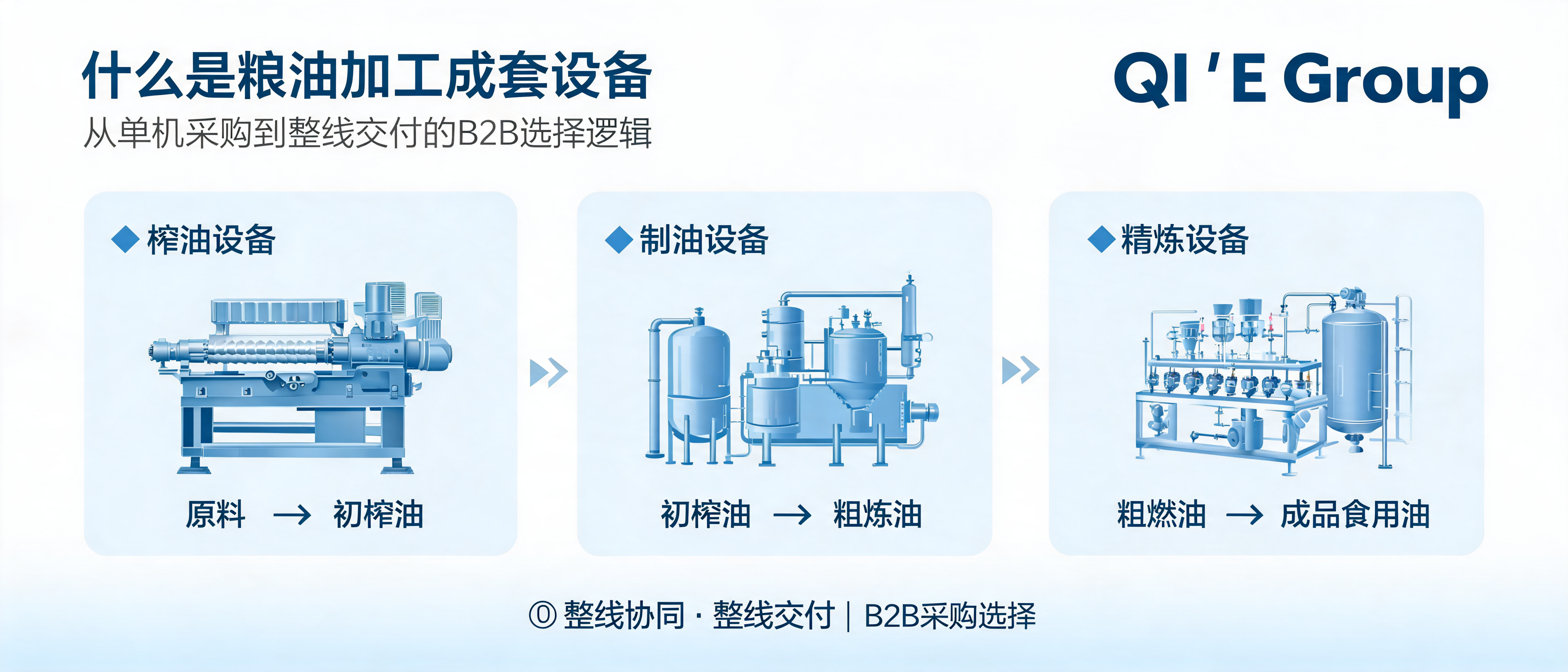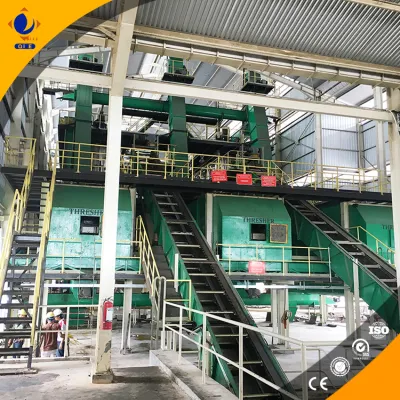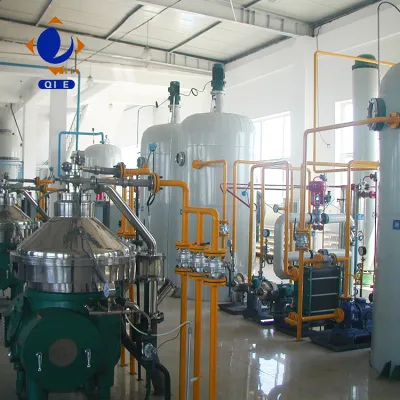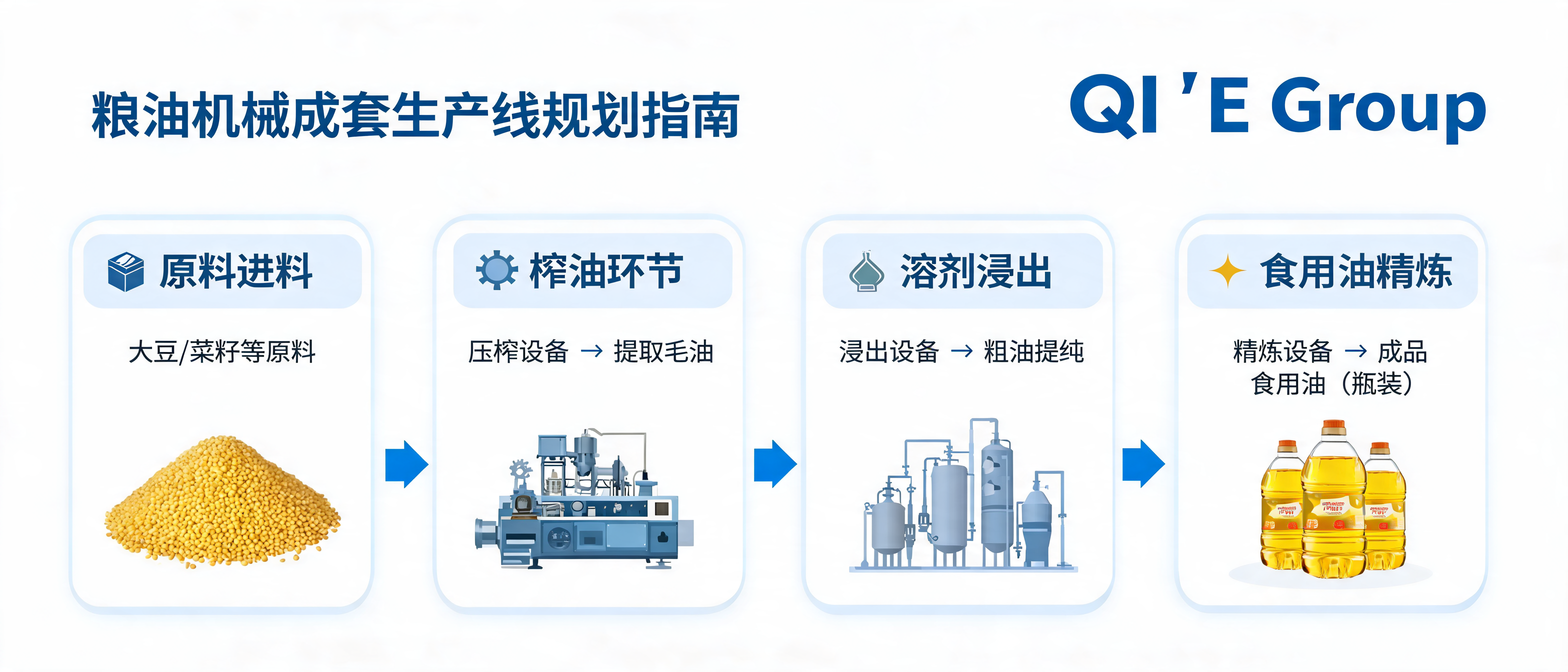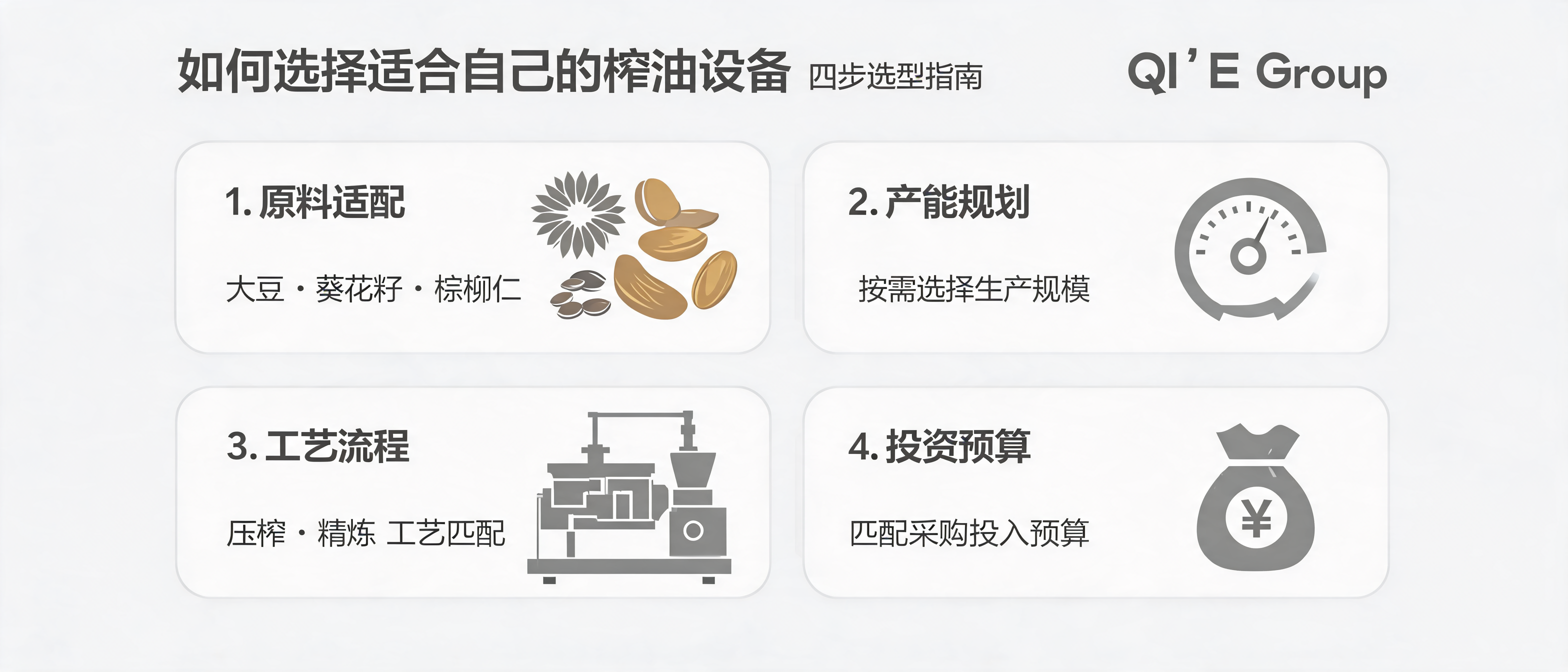
Reliable palm kernel oil production starts with matching the equipment to the raw material, production target and site conditions. Installation, commissioning and maintenance then determine how consistently the plant can operate within its approved process limits.
Qi'e Grain and Oil Machinery Co., Ltd. supplies palm kernel oil extraction and refining equipment, supported by equipment design, installation and technical support. This guide helps plant owners, project engineers, operators and maintenance teams organize equipment selection, start-up checks and safe troubleshooting.
Qi'e’s stated equipment capacity range is 5–500 tonnes per day. Before choosing a configuration, confirm whether the quoted capacity refers to kernel input, extraction throughput or refining throughput, and establish the planned operating hours.
For projects in Asia, Africa and South America, include local climate, utility reliability and applicable safety and environmental requirements in the design review.
Qi'e’s supplied product information lists residual oil of ≤1% and solvent consumption of ≤2 kg/t. These figures should be evaluated against the proposed process configuration and agreed operating conditions, rather than treated as unconditional results for every installation.
Installation should follow approved project drawings, equipment manuals and applicable regulations. Assign responsibility for mechanical assembly, electrical work, utilities and safety inspections before equipment arrives.
Commissioning should establish that the installed equipment operates as intended before routine production begins. The sequence must follow the approved commissioning plan; checks that are suitable for one machine may not be suitable for another.
Include normal start-up and shutdown, feed control, alarm response, sampling, routine inspection and emergency actions. Operators should understand when to stop production and when to escalate to maintenance or technical support. Confirm training responsibilities and handover documentation within the project scope.
Use the manufacturer’s maintenance instructions to set inspection and service intervals. Adjust the plan for operating hours, feedstock conditions and inspection findings rather than applying a universal schedule.
Inspect motors, pumps, bearings, seals, couplings and wear-prone parts for abnormal noise, vibration, temperature or leakage. Follow specified lubrication and replacement requirements.
Check sensor condition, instrument accuracy and alarm records. Restrict PLC changes to authorized personnel and retain approved settings and backups where supported.
Monitor oil-quality trends, including moisture and volatile matter where specified. Inspect pressure and solvent equipment under the relevant procedures and statutory requirements.
Keep a maintenance history: record operating hours, faults, inspections, replaced parts and corrective actions. These records help distinguish recurring equipment issues from changes in raw material or operating conditions.
The following checks provide diagnostic direction, not a confirmed diagnosis. Before intrusive inspection, follow site isolation procedures, including lockout/tagout and control of stored pressure, heat and other hazardous energy.
| Symptom | Possible cause | Inspection direction and action |
|---|---|---|
| Low or unstable throughput | Irregular feed, blockage or component wear | Review feed and load trends. Isolate equipment before checking restrictions or worn parts. |
| Residual oil above the agreed target | Feed preparation changes, unsuitable settings or wear | Verify sampling first, then compare material condition and process settings with approved values. Consult technical support before adjustments outside those limits. |
| Motor overheating or abnormal vibration | Overload, misalignment, bearing problems or electrical faults | Stop according to operating procedures. Have qualified personnel inspect mechanical and electrical conditions before restart. |
| Pump flow or pressure instability | Restricted inlet, air ingress or seal deterioration | Review readings and approved valve positions. Isolate and depressurize before opening equipment. |
| PLC alarm or unexpected stop | Active interlock, sensor fault or communication issue | Record the alarm and operating state. Authorized personnel should investigate the cause; do not bypass the interlock. |
| Suspected solvent leak or abnormal solvent loss | Containment or recovery-system fault | Follow the site emergency procedure and restrict access. Trained personnel must assess the system before inspection or restart. |
For equipment selection, share your target capacity, kernel characteristics, required oil specification, preferred process route, site location and available utilities. For troubleshooting, provide the equipment model, alarm details, recent operating records and maintenance history.
Qi'e provides design, installation and technical support for palm kernel oil extraction and refining projects. Explore the palm kernel oil production line equipment and confirm the configuration, service scope and acceptance criteria for your plant before procurement.
 482
|
 Qi'e Grain and Oil Machinery Co., Ltd. oil processing equipment selection oil pressing production line vegetable oil solvent extraction equipment edible oil refining equipment
 241
|
QI'E Group edible oil processing equipment oil pressing production line vegetable oil solvent extraction equipment edible oil refining equipment
 138
|
Qi'e Group oil processing equipment selection oil pressing production line vegetable oil solvent extraction equipment edible oil refining equipment
332
|
Qi'e Grain and Oil Machinery Co., Ltd. grain and oil processing equipment oil pressing equipment edible oil production line edible oil refining equipment
 275
|
Qi'e Grain and Oil Machinery Co., Ltd. grain and oil machinery equipment edible oil production line oil pressing equipment edible oil refining equipment