Evaluating palm kernel oil extraction and refining equipment requires more than comparing rated capacity or automation features. A credible energy and emissions assessment connects feedstock quality, process configuration and utility consumption with measured operating results and the environmental requirements of the project location.
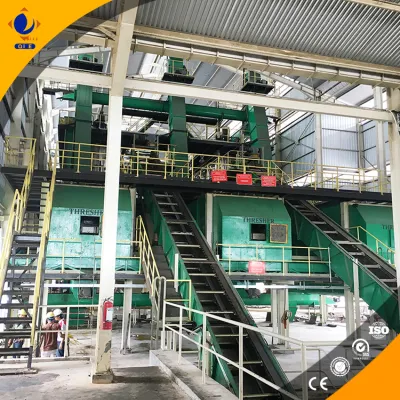
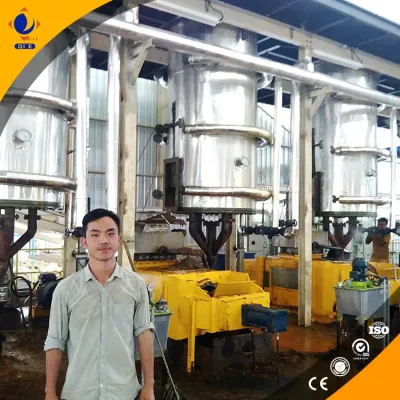
Qi'e Grain and Oil Machinery Co., Ltd. supplies palm kernel oil extraction and refining equipment, with stated capacity options from 5 to 500 tonnes per day, automated control systems, and support for equipment design, installation and technical service. The assessment framework below helps project owners define what to verify before procurement and during commissioning.
Key assessment principle: equipment design capabilities and quality certifications do not, by themselves, establish project-specific energy savings, emissions reductions or environmental compliance. These outcomes require defined measurement boundaries and operational verification.
Palm kernel oil is obtained from the kernel, rather than the fruit pulp used for palm oil production. Assessment data should therefore relate to the actual palm kernel feedstock and the selected extraction and refining route—not to a different oil-processing application.
Before comparing equipment proposals, establish which operations are included. Extraction and refining have different inputs, outputs and utility requirements. Solvent consumption is relevant to a solvent-based extraction configuration; it should not be treated as an operating indicator for a purely mechanical pressing line.
Feedstock moisture, impurities and consistency can influence preparation requirements and extraction performance. Crude oil quality also affects the downstream refining conditions needed to achieve the agreed product specification. Record these inputs alongside operating results so that changes in energy use are not incorrectly attributed to equipment alone.
Agree acceptance criteria and sampling methods for moisture, impurities and feedstock consistency. Keep batch records available for comparison with extraction results and utility consumption.
Verify moisture and volatile matter against the agreed process requirements. Qi'e identifies control of these parameters as part of its equipment offering; the project should still define test methods and acceptance limits.
Qi'e states equipment indicators of residual oil ≤1% and solvent consumption ≤2 kg/t. These figures should be evaluated with their applicable process configuration, measurement basis and operating conditions. They are not direct measurements of energy consumption or atmospheric emissions.
| Indicator | Clarification required | Assessment boundary |
|---|---|---|
| Residual oil ≤1% | Confirm the sampled material, moisture basis, laboratory method and sampling frequency. | An extraction-performance indicator; not a finished-oil purity specification or emissions result. |
| Solvent consumption ≤2 kg/t | Define the tonne denominator, accounting period, inventory adjustment and treatment of startup or shutdown. | A solvent-use indicator for applicable extraction systems; not a direct air-emission rate. |
| Energy consumption | Measure electricity and thermal energy separately against an agreed throughput basis. | No project-specific energy consumption or savings figure is established by the supplied product information. |
Qi'e describes automated control and tested core components, including motors, pressure vessels, pumps and PLCs. For a specific project, review the proposed control scope, component specifications and maintenance requirements rather than assuming that automation alone delivers lower energy use.
These are engineering review points, not confirmation that every configuration includes the same recovery, monitoring or emission-control equipment.
Applicable air-emission limits, wastewater requirements, waste handling rules and permitting obligations depend on the project location and process scope. Where solvent extraction is included, solvent storage, handling, recovery and associated safety requirements also need site-specific review.
Qi'e's product information references CE, ISO9001 and BV-related credentials. Request current documentation and confirm its scope for the supplied equipment or organization. ISO9001 concerns quality management; it does not certify a plant's energy efficiency, emissions performance or compliance with local environmental permits.
For a useful technical discussion, provide your project location, palm kernel specifications, required daily throughput, intended extraction route, finished-oil requirements and available utilities. Include any local environmental limits and the performance measurements you expect to verify.
Qi'e's equipment design, installation and technical support services can support configuration discussions. Explore the palm kernel oil production line equipment and edible oil refining equipment, then align the proposed scope with a documented acceptance and operational verification plan.

 482
|
 Qi'e Grain and Oil Machinery Co., Ltd. oil processing equipment selection oil pressing production line vegetable oil solvent extraction equipment edible oil refining equipment
 259
|
Qi'e Group edible oil production line equipment oil pressing equipment vegetable oil solvent extraction equipment edible oil refining equipment
 437
|
Qi'e Grain and Oil Machinery Co., Ltd. integrated oil processing solutions oil production line equipment oil pressing equipment edible oil refining equipment
127
|
Qi'e Grain and Oil Machinery edible oil processing equipment oil pressing equipment oil solvent extraction equipment edible oil refining equipment
168
|
Qi'e Grain and Oil Machinery Co., Ltd. edible oil production line selection oilseed processing technology oil production line capacity oil press equipment configuration