Purchasing an oil press or a complete edible oil processing system is a technical and commercial decision. Equipment performance should be assessed against the intended raw material, production target, site conditions, operating model, and long-term service requirements. A structured evaluation helps procurement teams compare suppliers on consistent criteria and identify potential implementation risks before an order is placed.
Qi'e Grain and Oil Machinery Co., Ltd. supports edible oil producers with oil pressing equipment, oil production line equipment, and edible oil refining equipment. This checklist is designed to help project owners clarify key parameters and prepare more complete technical discussions with equipment suppliers.
The first procurement question is not simply which machine to buy, but what material must be processed and what finished-product standard is expected. Different oil-bearing materials have different physical properties, oil contents, pretreatment needs, and process requirements. Equipment selection should therefore begin with a clear material profile.
Confirm the oilseed or oil-bearing material to be handled, including its condition, expected cleanliness, moisture level, and whether pretreatment is required before pressing or extraction.
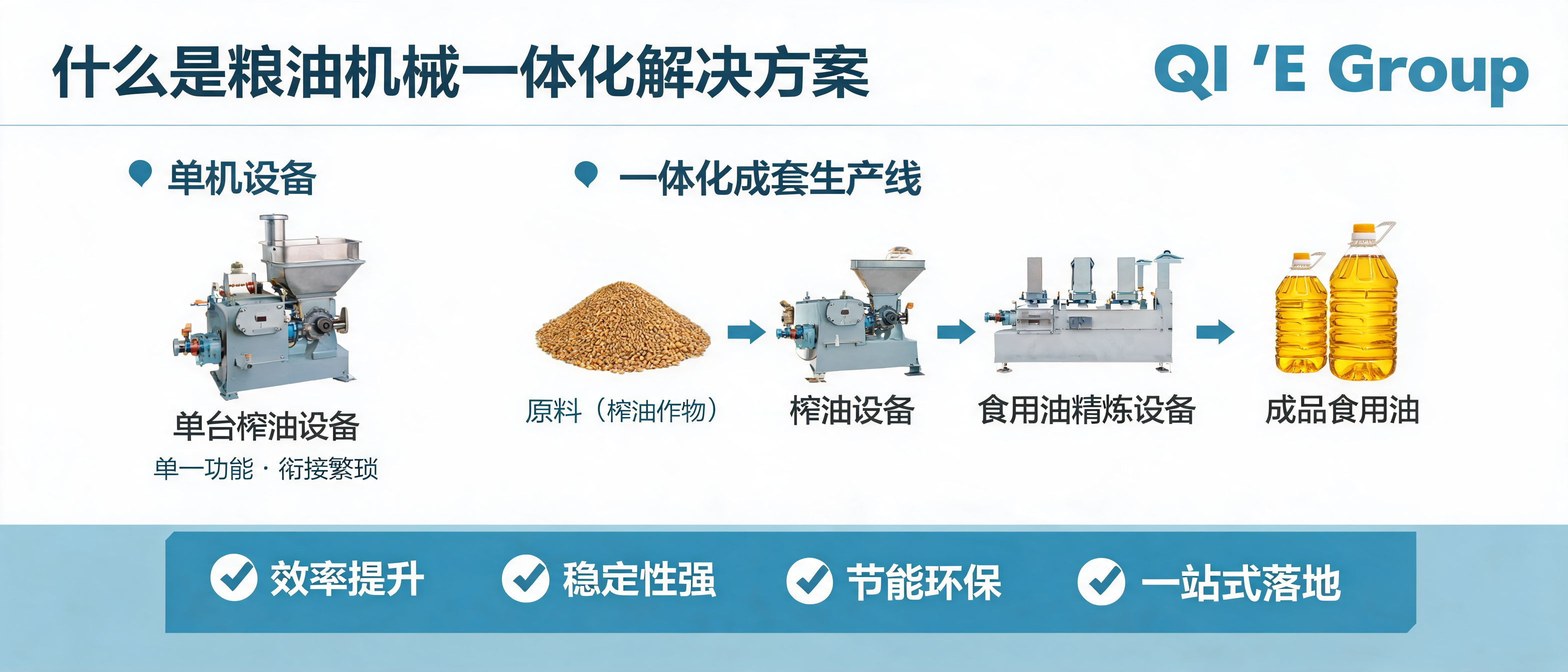
Determine whether the project requires mechanical pressing, solvent extraction, refining, or an integrated line that combines multiple processing stages.
Clarify whether the target is crude oil, refined edible oil, oilcake or meal handling, packaged-product preparation, or another downstream processing objective.
Capacity should be evaluated as a line-level requirement rather than a single-machine figure. The feeding, pretreatment, pressing or extraction, filtration, refining, storage, and conveying sections should be coordinated to avoid bottlenecks. Procurement teams should also distinguish between planned throughput and the actual operating conditions that may influence production continuity.
| Evaluation Area | Questions to Confirm | Why It Matters |
|---|---|---|
| Design throughput | What raw material volume is expected per hour, day, or production shift? | Supports line sizing and equipment matching. |
| Process balance | Are upstream and downstream sections sized for the same operating rhythm? | Helps prevent material accumulation or idle capacity. |
| Operating schedule | Will the plant operate intermittently, by shift, or continuously? | Affects equipment configuration, maintenance planning, and staffing. |
| Future expansion | Is there a planned increase in capacity or addition of process stages? | Allows the site layout and interface design to be considered in advance. |
Oil yield is influenced by more than the oil press itself. Raw material quality, preparation, moisture, temperature control, pressing conditions, extraction method, and operator practices can all affect the result. When comparing oil processing equipment, request a clear explanation of the proposed process configuration and the conditions under which performance parameters are evaluated. This provides a more useful basis for comparison than relying on an isolated yield claim.
Equipment materials, fabrication quality, electrical configuration, and utility consumption affect operational suitability and maintenance planning. The buyer should verify the applicable technical specifications for each process section, especially where the equipment will contact oil or process materials.
Automation should be selected according to the project’s capacity, process complexity, operator availability, and control requirements. A suitable configuration can support more consistent operation and improve process visibility, while the right choice should remain practical for the plant’s local operating conditions.
Appropriate where the process is relatively straightforward and trained operators will manage key operating adjustments on site.
Useful for projects that require coordinated operation across multiple process sections, clearer status monitoring, and repeatable production procedures.
Ask which functions are automated, which require manual intervention, and what operator training is needed for normal operation and fault response.
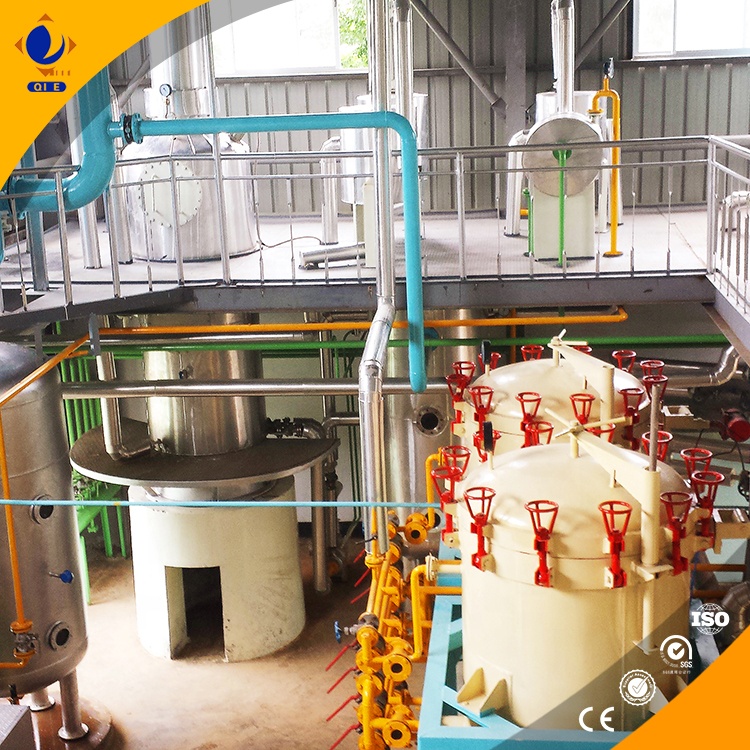
A technically suitable oil processing machine still requires a compatible installation environment. Early site review helps avoid unnecessary changes during delivery and installation. Procurement documentation should align the equipment proposal with the available building space, material flow, utilities, and logistics conditions.
Equipment procurement extends beyond delivery. The availability of technical communication, installation guidance, commissioning support, maintenance information, spare parts planning, and operator training should be considered as part of the overall project scope. These areas are particularly important for complete oil production lines, where individual sections must operate as an integrated system.
Practical supplier question: Ask for a clear description of the support scope before and after delivery, including documentation, installation coordination, commissioning assistance, routine maintenance guidance, recommended spare parts, and technical training arrangements.
A consistent comparison framework enables a procurement team to review proposals on relevant technical and implementation factors, rather than comparing only purchase price. The following items can be incorporated into an internal procurement review.
| Checklist Item | Information to Request or Verify | Review Status |
|---|---|---|
| Raw material and process suitability | Proposed process route, pretreatment requirements, and material compatibility. | To confirm |
| Line capacity and configuration | Capacity basis for each section and the complete production flow. | To confirm |
| Utilities and installation | Power, utility, space, foundation, and layout requirements. | To confirm |
| Automation and operating requirements | Control scope, operator responsibilities, and training needs. | To confirm |
| After-sales support | Installation, commissioning, maintenance, spare parts, and technical service scope. | To confirm |
A well-prepared procurement brief gives suppliers the information needed to recommend an appropriate oil press, refining section, extraction system, or integrated edible oil processing line. By confirming raw materials, capacity, process objectives, utilities, site conditions, automation needs, and service expectations in advance, project owners can make more informed equipment decisions. Qi'e Grain and Oil Machinery Co., Ltd. works with customers on equipment selection, project design, installation coordination, and technical service for edible oil processing applications.

 157
|
157
|
 small-scale palm oil refining equipment
palm oil refining process
oil refining equipment
impurity removal bleaching deodorization
PLC automatic control
small-scale palm oil refining equipment
palm oil refining process
oil refining equipment
impurity removal bleaching deodorization
PLC automatic control
 46
|
plant oil fractionation equipment selection
cooling crystallization process
centrifugal separation technology
solvent recovery system
fractionation troubleshooting
46
|
plant oil fractionation equipment selection
cooling crystallization process
centrifugal separation technology
solvent recovery system
fractionation troubleshooting
 41
|
PLC control in palm oil refining
temperature pressure closed-loop control
automated refining equipment
PLC application in oil processing
palm oil refining process optimization
41
|
PLC control in palm oil refining
temperature pressure closed-loop control
automated refining equipment
PLC application in oil processing
palm oil refining process optimization
 188
|
small palm oil refining equipment
energy saving technology
batch refining process
continuous refining process
palm oil processing efficiency
188
|
small palm oil refining equipment
energy saving technology
batch refining process
continuous refining process
palm oil processing efficiency
 300
|
Qi'e Grain and Oil Machinery Co., Ltd.
emerging markets
efficient and eco-friendly equipment
grain and oil processing
overseas procurement
300
|
Qi'e Grain and Oil Machinery Co., Ltd.
emerging markets
efficient and eco-friendly equipment
grain and oil processing
overseas procurement