In the demanding environment of palm oil refining, equipment faces the rigors of high-load continuous operation, where core components like motors, pumps, bearings, and gears must perform reliably to ensure uninterrupted production. This technical overview explores the engineering principles and maintenance strategies behind the QIE-4030KW automated palm oil refining equipment from Penguin Group, emphasizing motor selection with high-temperature insulation, advanced heat dissipation design, and comprehensive fault diagnosis methodologies. Addressed to plant engineers and equipment decision-makers, this guide distills best practices for enhancing operational stability, optimizing energy efficiency, and extending equipment service life.
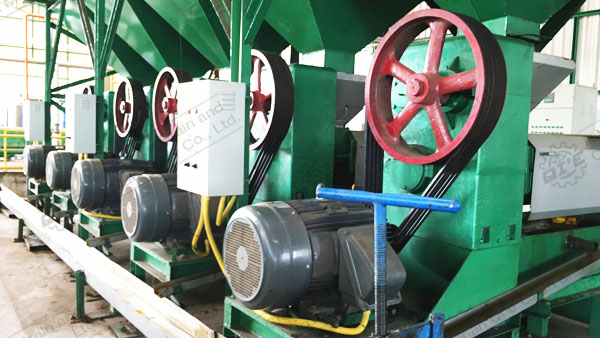
Selecting the correct electric motor for palm oil refining equipment is paramount, especially for those operating under continuous full-load conditions. Penguin Group’s QIE-4030KW model motors employ high-grade Class H insulation systems rated for thermal resistance up to 180°C, ensuring minimal degradation under heat stress compared to standard Class F motors (rated 155°C). Additionally, these motors adopt optimized stator winding configurations and superior varnishing techniques, reducing electrical losses and enhancing longevity in high-temperature environments.
The motor design integrates advanced cooling structures such as radial finned housings combined with forced air circulation, significantly lowering the average operating temperature by up to 15-20°C compared to conventional designs. This improvement directly correlates with a 25% increase in mean time between failures (MTBF) — a critical reliability metric in industrial settings.
Pumps in palm oil refining systems must withstand aggressive thermal cycles and possible corrosive elements in feedstock oils. Penguin Group utilizes corrosion-resistant stainless steel alloys (AISI 316L) and fluoropolymer-based mechanical seals to maintain integrity under temperatures exceeding 120°C. This configuration reduces seal leakage risks, thereby preventing contamination and costly downtime.
Beyond materials, vibration damping mounts and precision shaft alignment reduce mechanical stresses, further stabilizing pump operation during continuous runs.
Bearings and gears are subject to cyclic mechanical loads causing fatigue over extended operating hours. Penguin Group employs fatigue-tested (per ASTM D7661) high-toughness alloy steel for gears and heavy-duty ceramic-coated roller bearings offering corrosion resistance and wear reduction.
Lubrication schemes are tailored using synthetic ester-based oils with a recommended replacement cycle every 4000 operational hours, monitored via PLC-driven oil condition sensors to preempt degradation. The application of closed-loop grease recirculation systems further extends component lifespan by maintaining stable friction profiles and dissipating heat efficiently.
The heart of reliable operation lies in proactive fault identification. Penguin Group’s automated palm oil refining systems utilize integrated sensors capturing vibration anomalies, temperature elevations, and pressure fluctuations. Data collected through PLC modules feed into predictive maintenance algorithms, enabling timely interventions before catastrophic failures.
A flowchart detailing stepwise fault analysis leverages vibration frequency spectrum analysis to distinguish between imbalance, misalignment, and bearing defects within 1-3 detection cycles, significantly reducing troubleshooting time.
Penguin Group provides comprehensive maintenance toolkits, including detailed inspection checklists and lubricant replacement guides aligned with operational hours. For example, recommended lubrication frequency intervals are explicitly tied to temperature readings exceeding 70°C, adapting schedules dynamically to operating conditions.
Daily visual inspections coupled with monthly detailed machinery health evaluations reduce downtime incidents by an estimated 20%.
By integrating these technical advantages—robust motor insulation, superior heat dissipation, durable pump materials, fatigue-resistant bearings and gears, and strategic maintenance digitization—the Penguin Group automated palm oil refining equipment significantly improves plant uptime and reduces total cost of ownership. Energy consumption savings of up to 12% arise from optimized motor efficiency and minimized thermal losses.
Most importantly, the tailored maintenance approach promotes equipment longevity and fortifies operational resilience, critical factors in maximizing ROI within competitive palm oil industries.

 175
|
175
|
 palm oil automation
PLC control system
remote maintenance
process monitoring
quality traceability
404
|
palm fruit preprocessing equipment
corrosion-resistant materials for agro-processing
automatic control systems in oil palm mills
extreme climate agricultural machinery
palm oil processing optimization
palm oil automation
PLC control system
remote maintenance
process monitoring
quality traceability
404
|
palm fruit preprocessing equipment
corrosion-resistant materials for agro-processing
automatic control systems in oil palm mills
extreme climate agricultural machinery
palm oil processing optimization
 370
|
palm kernel oil refining automation
refining equipment stability
oil processing automation systems
palm oil production optimization
intelligent control in oil refining
370
|
palm kernel oil refining automation
refining equipment stability
oil processing automation systems
palm oil production optimization
intelligent control in oil refining
 366
|
palm oil refining process
palm oil bleaching technology
palm oil deodorization control
edible oil quality standards
automated palm oil equipment
366
|
palm oil refining process
palm oil bleaching technology
palm oil deodorization control
edible oil quality standards
automated palm oil equipment
 41
|
PLC control in palm oil refining
temperature pressure closed-loop control
automated refining equipment
PLC application in oil processing
palm oil refining process optimization
41
|
PLC control in palm oil refining
temperature pressure closed-loop control
automated refining equipment
PLC application in oil processing
palm oil refining process optimization