Nigeria-Style Scale-Up (Common KPI Focus)
Plants often target 1.5–2.5% yield improvement by reducing oil loss in sludge/filtration and stabilizing bleaching. Many also report improved shift-to-shift consistency, lowering rework and off-spec batches.

Across major palm oil regions—especially Nigeria and Malaysia—refineries are under the same pressure: grow capacity fast, keep quality consistent, and reduce losses without inflating energy bills. This is exactly where the shift from manual or semi-automatic equipment to an industrial palm oil refining machine becomes less “upgrade” and more “survival strategy.”
The change is measurable: higher throughput per shift, tighter control of bleaching/deodorization parameters, and lower oil loss in sludge and spent earth—often the hidden cost center in small-to-mid-sized plants.
Traditional palm oil refining equipment—manual kettles, open heating tanks, or partial automation—typically struggles with the same operational bottlenecks:
Manual dosing and monitoring often leads to inconsistent neutralization and bleaching performance, especially between shifts.
Open systems and poor insulation can increase heating losses; prolonged batch time pushes kWh per ton upward.
Higher residual oil in soapstock/sludge and suboptimal filtration can turn “acceptable waste” into a major yield leak.
In real procurement decisions, buyers rarely ask only “How many tons per day?” They ask: “Can I run it with predictable quality, predictable yield, predictable power consumption, and predictable downtime?”
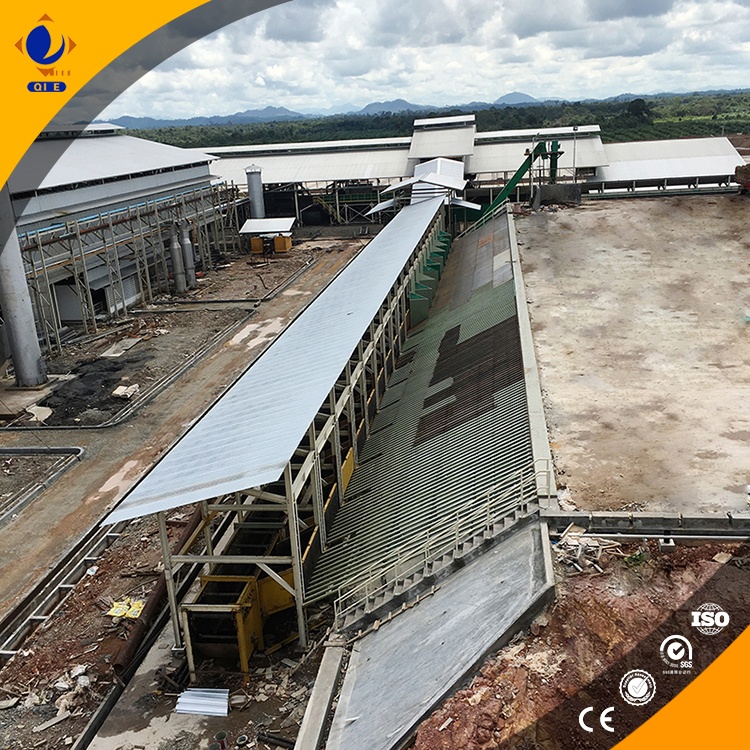
Below is a practical comparison between a traditional setup (manual/semi-automatic) and a modern industrial-grade palm oil refining machine built for stable production. The numbers are reference ranges based on common plant configurations; actual results vary by crude oil quality, utilities, and process targets.
| Metric | Traditional Equipment (Manual / Semi-auto) | Industrial Palm Oil Refining Machine (Automated/Modular) |
|---|---|---|
| Typical Output Stability | Varies by operator; batch-to-batch fluctuations common | More consistent due to controlled temperature/vacuum/flow |
| Energy Use (Refining Stage) | ~55–85 kWh/ton (often longer heating + losses) | ~35–60 kWh/ton with optimized heating and process time |
| Oil Loss to Sludge/Soapstock | ~1.5%–3.0% (common without precise control) | ~0.8%–1.8% with better dosing + filtration support |
| Bleaching & Deodorization Control | Manual timing; inconsistent color/odor removal | More stable parameters; improved repeatability for color/odor specs |
| Footprint & Layout Efficiency | Often scattered equipment; higher transfer losses | Compact industrial sizing (e.g., 1500×1800×1950 mm module) supports cleaner layout |
| Power Compatibility | May require rework for different sites | Supports 380V/450V configurations depending on plant grid |
| Rated Power (Example Unit) | Higher installed power for similar throughput (varies) | ~15 kW installed power for a compact refining module (site-dependent) |
| Maintenance & Downtime | Frequent small failures; harder root-cause tracking | Modular design improves access; faults are easier to isolate and fix |
For decision-makers, the table reveals a core truth: industrial equipment isn’t just “faster.” It’s more predictable—and predictability is what makes financing, staffing, and supply contracts easier to manage.
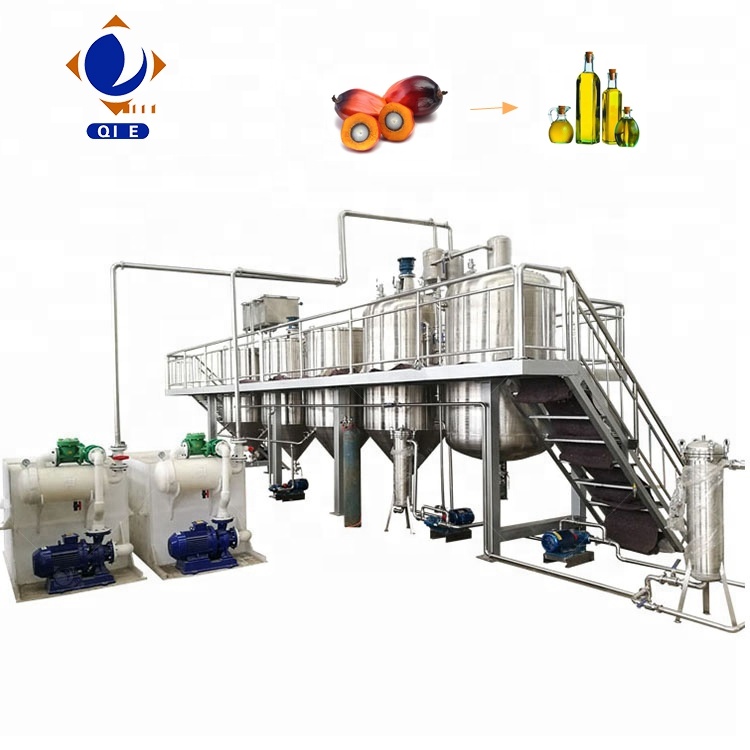
Many plants aren’t built on a blank sheet of paper. They expand in phases, add tanks when demand rises, and fight layout limitations. A modular palm oil refining system is designed for those realities—especially for regions where utilities and plant space vary widely.
Insert a simple process flow diagram: Crude Oil → Degumming/Neutralization → Bleaching → Filtration → Deodorization → Finished Oil. A second graphic can compare kWh/ton and oil loss (%) between traditional vs industrial setups.
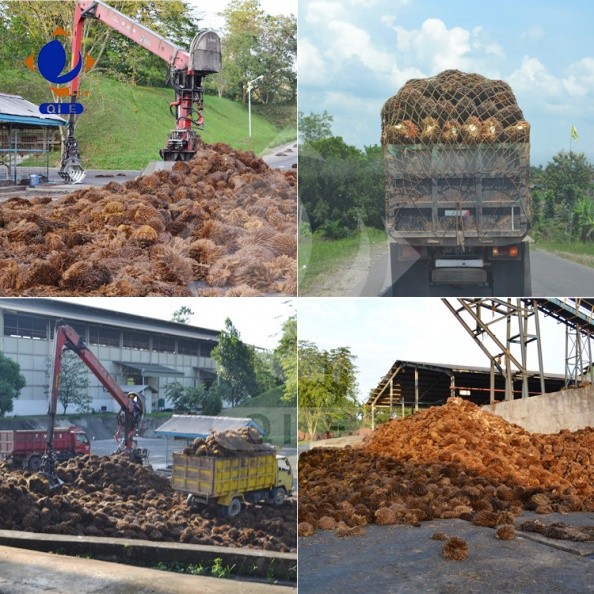
In Nigeria, many refiners scale from small operations into more structured factories. The operational priority is often straightforward: increase daily refined output while keeping staffing and wastage under control. In Malaysia, producers typically focus on stable specs, process discipline, and continuous improvement because the market is more standardized and quality-driven.
In both cases, industrial refining machines tend to deliver the same practical outcomes when correctly sized:
Plants often target 1.5–2.5% yield improvement by reducing oil loss in sludge/filtration and stabilizing bleaching. Many also report improved shift-to-shift consistency, lowering rework and off-spec batches.
Targets often include tighter control over deodorization conditions to keep odor stable and reduce quality complaints. A typical energy reduction goal is 15–30% versus older thermal setups, depending on insulation and cycle time.
“In refining, the biggest profits are often recovered from what used to be accepted as ‘normal loss’—oil trapped in byproducts, unstable process time, and avoidable reheating cycles.”
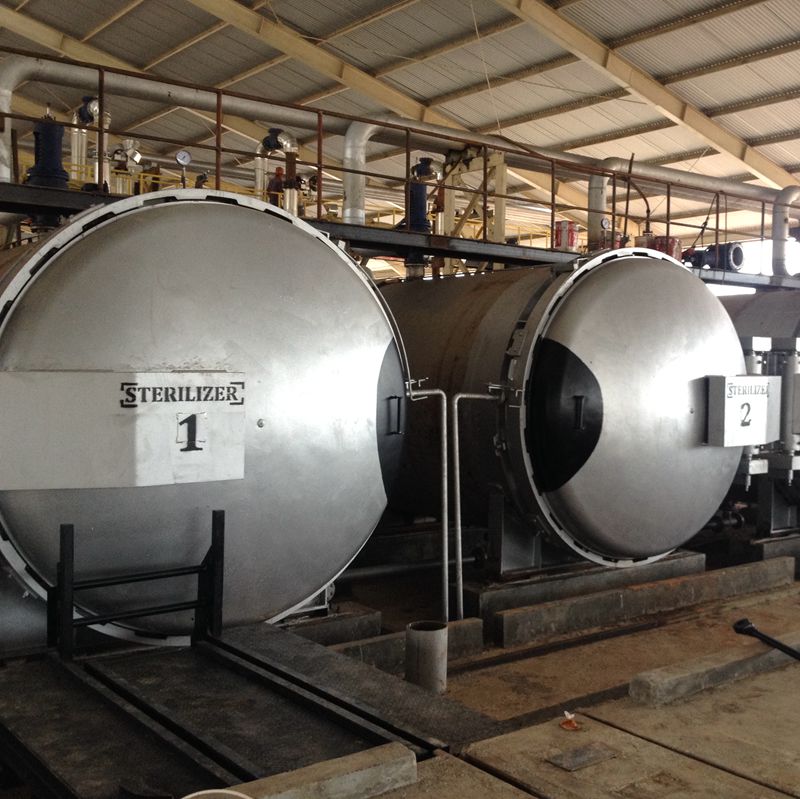
When buyers search for ISO9001 certified palm oil refining equipment, they are usually trying to reduce procurement risk: inconsistent fabrication, variable component sourcing, undocumented testing, and unpredictable after-sales support.
In practical terms, a quality management system helps ensure that the machine’s critical points—welding integrity, sealing surfaces, motor performance, electrical safety, and factory acceptance checks—follow repeatable procedures. For overseas plants, repeatability matters as much as the machine itself, because downtime is more expensive when spare parts and technicians are far away.
Sustainability in palm oil refining is not only about emissions or reporting. For many processors, it begins with measurable operational discipline: lower energy per ton, lower oil loss, and cleaner process control that avoids unnecessary reprocessing. Industrial refining machines support these outcomes by turning “operator experience” into “controlled parameters,” helping plants grow without multiplying labor and waste.
As global buyers tighten their supplier expectations—on consistency, documentation, and plant reliability—industrial-grade refining is increasingly the entry ticket to long-term contracts, not a luxury upgrade.
Get a configuration matched to your crude oil quality, target specs, site voltage (380V/450V), and capacity plan—so your refining line runs efficiently from day one.
Consult a Customized Industrial Palm Oil Refining Machine SolutionTypical response includes process recommendation, module selection, utility guidance, and a practical layout suggestion for your plant.
 44
|
44
|
 palm kernel oil extraction equipment
eco-friendly oil processing solutions
low solvent consumption machinery
heat recovery systems in oil refining
automated palm oil production line
palm kernel oil extraction equipment
eco-friendly oil processing solutions
low solvent consumption machinery
heat recovery systems in oil refining
automated palm oil production line
 336
|
Palm oil refining equipment
Automatic control system
Data acquisition system
Quality traceability
Anomaly alarm
336
|
Palm oil refining equipment
Automatic control system
Data acquisition system
Quality traceability
Anomaly alarm
 362
|
["Palm Crude Oil Refining Equipment"
"PLC Automation Control System"
"Palm Oil Processing Technology"
"Energy-Saving Equipment for Oil Refining"
"High-Efficiency Production Solutions"]
252
|
Palm fruit pre - treatment solutions
South American palm oil processing
Non - standard customized cleaning systems
Solutions for press equipment blockages
Palm oil refining equipment
362
|
["Palm Crude Oil Refining Equipment"
"PLC Automation Control System"
"Palm Oil Processing Technology"
"Energy-Saving Equipment for Oil Refining"
"High-Efficiency Production Solutions"]
252
|
Palm fruit pre - treatment solutions
South American palm oil processing
Non - standard customized cleaning systems
Solutions for press equipment blockages
Palm oil refining equipment
 258
|
Palm oil pressing process
Equipment selection guide
Highly automated equipment
Energy - saving technology
304 stainless steel
258
|
Palm oil pressing process
Equipment selection guide
Highly automated equipment
Energy - saving technology
304 stainless steel