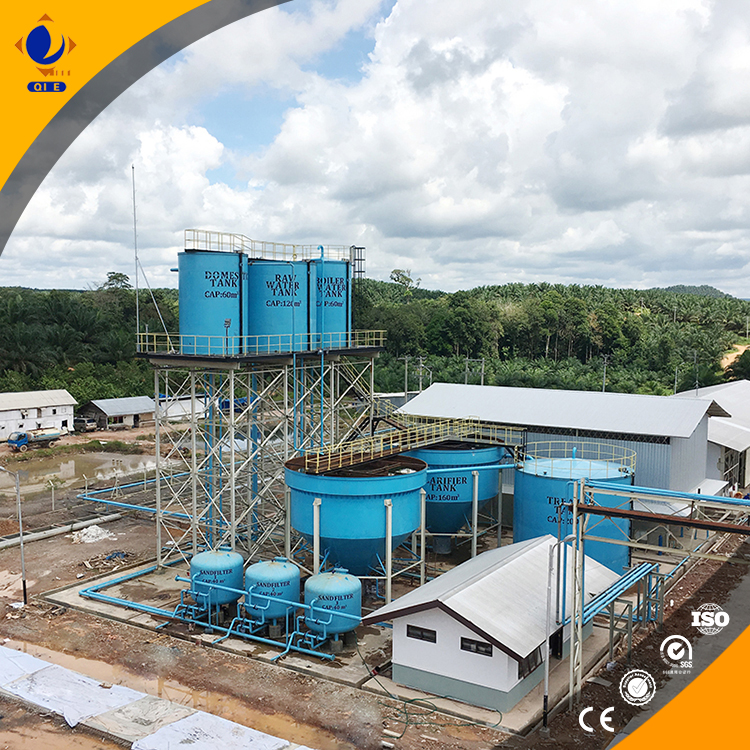
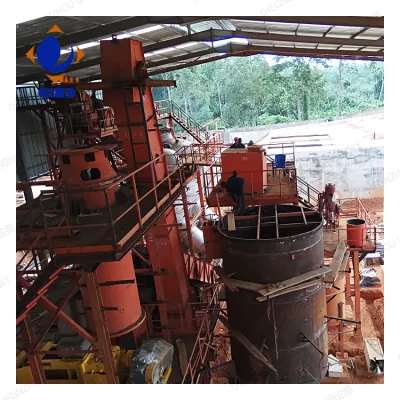
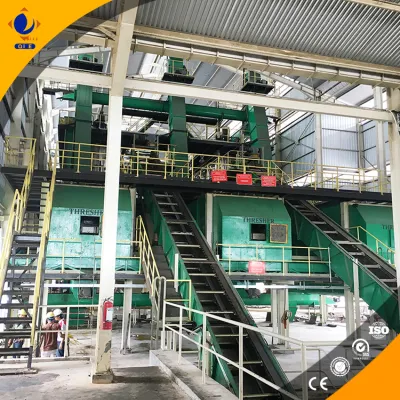
Selecting oil processing equipment starts with defining the processing route—not simply choosing a single machine.
For an oil processing project, the appropriate configuration depends on feedstock characteristics, expected capacity, finished-oil requirements, available utilities, automation goals and site conditions. Qi'e Grain and Oil Machinery Co., Ltd. supports B2B oil processors with equipment and project services covering oil pressing, vegetable oil solvent extraction and edible oil refining. For small and medium-sized palm oil operations, a compact refining unit can be an important part of a practical, energy-conscious production plan.
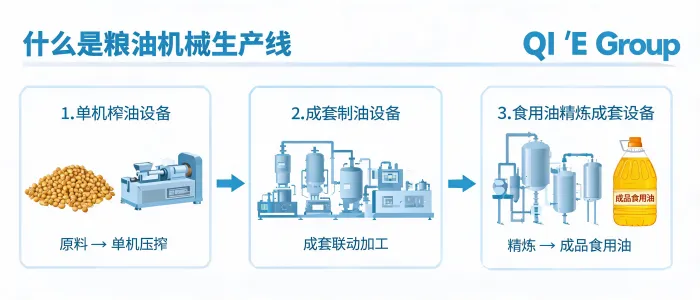
Oil processing lines are commonly evaluated as connected stages. The specific route should be determined by the oil-bearing material, the condition of the crude oil and the intended product specification. Each stage has a distinct role in the overall production system.
Pressing equipment is used to mechanically recover oil from suitable oilseeds or oil-bearing materials. Selection should consider feedstock preparation, moisture condition, required throughput and the handling of press cake.
Vegetable oil solvent extraction equipment may be considered where the process design requires extraction after preparation or pressing. Utility planning, safety management, environmental requirements and process integration should be assessed before configuration.
Refining equipment is selected to process crude oil according to the project’s finished-oil requirements. For palm oil projects, refining capacity, control method, material selection and utility consumption are key considerations.
A well-matched oil processing line balances production objectives with the practical conditions of the plant. The following questions help establish a clear basis for equipment evaluation.
| Evaluation Area | Questions to Address During Planning |
|---|---|
| Feedstock and crude oil | What material will be processed, and what are the characteristics of the incoming crude oil? The feedstock determines the appropriate pressing, extraction or refining route. |
| Required capacity | What hourly or daily output is needed? Capacity should match operating plans, upstream supply and downstream packaging or storage arrangements. |
| Automation and staffing | How many operators are available, and what level of process control is preferred? PLC-controlled systems can simplify routine operation and support consistent process management. |
| Energy and utilities | Assess steam, water, power and site utility availability early. These inputs affect equipment configuration, operating planning and installation preparation. |
| Installation and service | Consider plant layout, equipment access, material choices, commissioning needs and technical support requirements as part of the complete project scope. |
For projects focused on refining crude palm oil at a modest scale, Qi'e Grain and Oil Machinery Co., Ltd. offers a mini palm oil refining equipment solution designed for small and medium-sized palm oil producers. The equipment is intended to combine compact production planning with automated operation and controlled utility consumption.
Its maximum stated processing capacity is up to 1,000 kg per hour. This makes capacity confirmation especially important: the selected refining unit should align with the actual supply of crude palm oil, the planned operating schedule and the capability of related plant systems.
The following technical information provides a practical reference for preliminary utility and manpower planning. Final project configuration should be reviewed against actual site conditions and process requirements.
| Item | Equipment Reference | Selection Relevance |
|---|---|---|
| Maximum capacity | Up to 1,000 kg/hour | Supports capacity planning for small and medium-sized palm oil refining operations. |
| Control system | PLC control system | Helps simplify operation and supports process control planning. |
| Operating personnel | Typically 2–3 people for the production process | Useful for evaluating staffing arrangements and operator training needs. |
| Steam consumption | Less than 300 kg per tonne of oil | A reference point for steam-system preparation and energy-use assessment. |
| Soft water consumption | Approximately 160 kg/hour | Helps define water supply and treatment considerations. |
| Electricity consumption | 22 kWh per tonne of oil | Provides a reference for electrical infrastructure and operating-cost planning. |
| Construction materials | Carbon steel or stainless steel | Material selection can be considered in relation to project requirements and operating environment. |
A refining project depends on coordinated components and practical implementation. The mini palm oil refining equipment incorporates key components including motors, pressure vessels, pumps, a PLC system, gears, bearings and engines. Reviewing the full equipment scope helps buyers prepare for installation, operation and maintenance requirements.
The most suitable oil processing equipment is the configuration that fits the material, production target, utilities, staffing and site realities of the project. Whether the requirement involves an oil pressing production line, vegetable oil solvent extraction equipment or edible oil refining equipment, defining these factors early supports more informed selection and smoother implementation.
Qi'e Grain and Oil Machinery Co., Ltd. provides integrated support from equipment design and manufacturing through installation and technical service. The mini palm oil refining equipment is produced under an ISO9001:2000 quality management system and is a focused option for processors evaluating compact, PLC-controlled palm oil refining capacity.

 58
|
 Qieji Group grain and oil processing complete equipment whole-line delivery oil pressing equipment B2B procurement
 305
|
Qi'e Grain and Oil Machinery Co., Ltd. grain and oil machinery production line turnkey equipment oil pressing equipment edible oil refining
 254
|
palm oil physical fractionation palm stearin purity improvement fat crystallization control oil filtration separation fractionation process optimization
 397
|
palm oil deodorization process temperature vacuum control oil quality improvement deodorization efficiency optimization free fatty acid removal
 223
|
Qi'e Group edible oil processing plant planning oilseed processing equipment oil production line capacity oil pressing and refining process