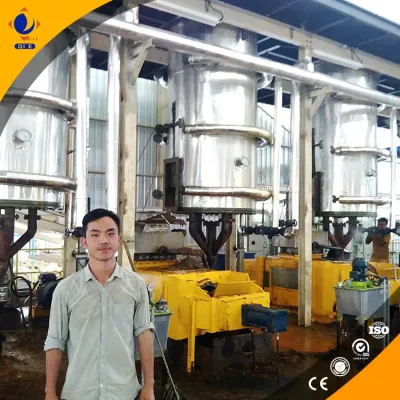
A complete grain and oil machinery solution brings together the processing stages, control systems, utility requirements, and technical support needed to convert oilseeds or crude oil into finished edible oil. For B2B processing projects, the equipment must be selected as an integrated system rather than as isolated machines.
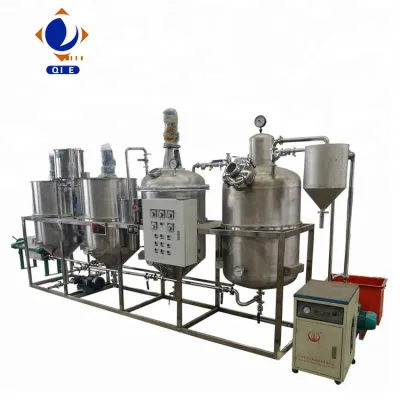
Qi'e Grain and Oil Machinery Co., Ltd. supports oil processors with oil pressing equipment, oilseed processing lines, vegetable oil solvent extraction equipment, edible oil refining systems, installation, and technical service. The company’s mini palm oil refining equipment is designed as a compact refining option for small- and medium-scale palm oil processing operations.
The configuration of a grain and oil machinery project depends on the raw material, processing target, production capacity, local utilities, and desired level of automation. A complete solution commonly includes the following interconnected parts:
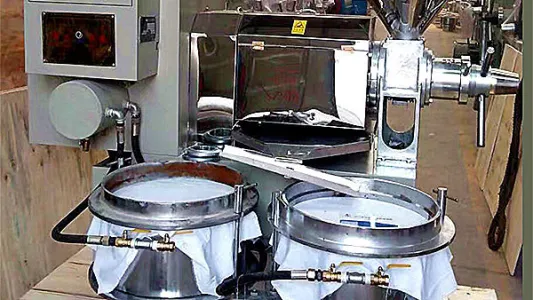
Oil pressing equipment supports the mechanical extraction stage and can be incorporated into processing lines according to the characteristics of the oilseed and the project workflow.
Vegetable oil solvent extraction equipment may be considered where an extraction process is part of the planned edible oil production line.
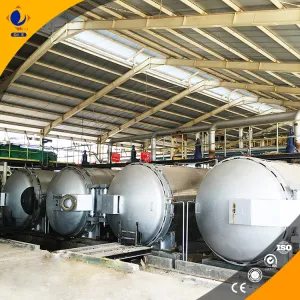
Oil refining equipment processes crude oil within the refining section of the plant. The selected configuration should align with the oil type, capacity requirements, and operating conditions.
Equipment delivery is supported by project-oriented services such as design, manufacturing, installation, and technical guidance for the processing line.
For processors handling palm oil on a smaller scale, refining equipment should balance practical capacity, resource consumption, operating simplicity, and equipment durability. Qi'e Group’s mini palm oil refining equipment is an automatic crude palm oil refining solution developed for small- and medium-sized palm oil producers.
Application focus: This compact palm oil refining system is intended for businesses that need an organized refining unit within a small-scale palm oil production project, while retaining PLC-based operational control and defined utility requirements.
| Item | Specification or Feature |
|---|---|
| Maximum production capacity | Up to 1,000 kg per hour |
| Control method | PLC control system for simplified operation |
| Operating personnel | The complete production process can be operated by 2–3 people |
| Steam consumption | Less than 300 kg per ton of oil |
| Soft water consumption | Approximately 160 kg per hour |
| Electricity consumption | 22 kWh per ton of oil |
| Main material options | Carbon steel or stainless steel |
Actual operating performance can vary according to crude oil condition, site utilities, process configuration, and operating practice. Project requirements should be confirmed during technical consultation.
Small-scale production does not eliminate the need for process consistency. A PLC control system helps operators manage the refining process through a more centralized operating interface, supporting a practical workflow for compact refining plants. For businesses with limited on-site staffing, this can make daily operation more manageable while maintaining attention to production controls.
A refining machine should be evaluated in the context of the entire edible oil production process. Before selecting a mini palm oil refining system, processors should clarify the practical interfaces between crude oil supply, utilities, equipment layout, operator responsibilities, and downstream handling.
Qi'e Group serves grain and oil processing projects with equipment and technical support covering oil pressing, oil production lines, solvent extraction, and edible oil refining. Its project approach recognizes that equipment selection involves both machinery performance and the operating conditions of the customer’s facility.
For palm oil processors in Asia, Africa, South America, and other markets, the mini palm oil refining equipment can be discussed as part of a broader solution that connects refining capacity with installation planning, operator workflow, and long-term technical service.
A well-defined grain and oil machinery solution starts with the right process scope: identify the oil source, capacity, utilities, automation needs, and service requirements, then configure the pressing, extraction, or refining equipment around those conditions.

 397
|
 palm oil deodorization process temperature vacuum control oil quality improvement deodorization efficiency optimization free fatty acid removal
 193
|
vegetable oil fractionation equipment continuous fractionation machine batch fractionation cooling crystallization process edible oil processing technology
 222
|
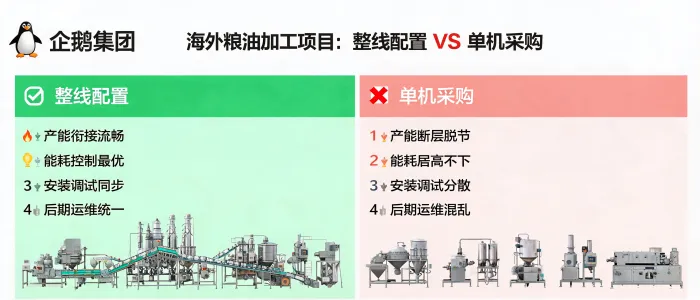
Qi'e Grain and Oil Machinery Co., Ltd. overseas grain and oil projects integrated line configuration single-machine procurement project delivery and O&M efficiency
 129
|
palm oil refining equipment core components high-load continuous operation motor selection criteria pump seal materials bearing fatigue strength
 58
|
Qieji Group grain and oil processing complete equipment whole-line delivery oil pressing equipment B2B procurement