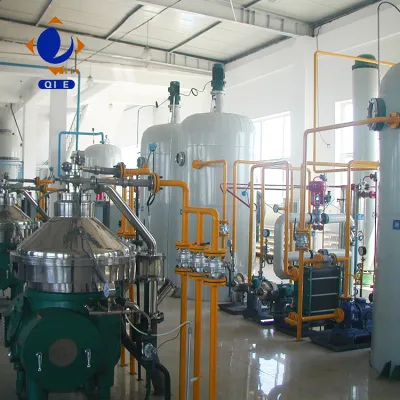
Successful oil processing projects begin with a clear process route. Whether the goal is crude oil production, solvent extraction, or finished edible oil refining, equipment selection should match the feedstock, planned throughput, product specification, site utilities, and operating model.
As a supplier of oil pressing equipment, oil production line equipment, and oil refining equipment, Qi'e Grain and Oil Machinery Co., Ltd. supports B2B customers in evaluating practical configurations for new facilities, capacity expansion, and processing upgrades.
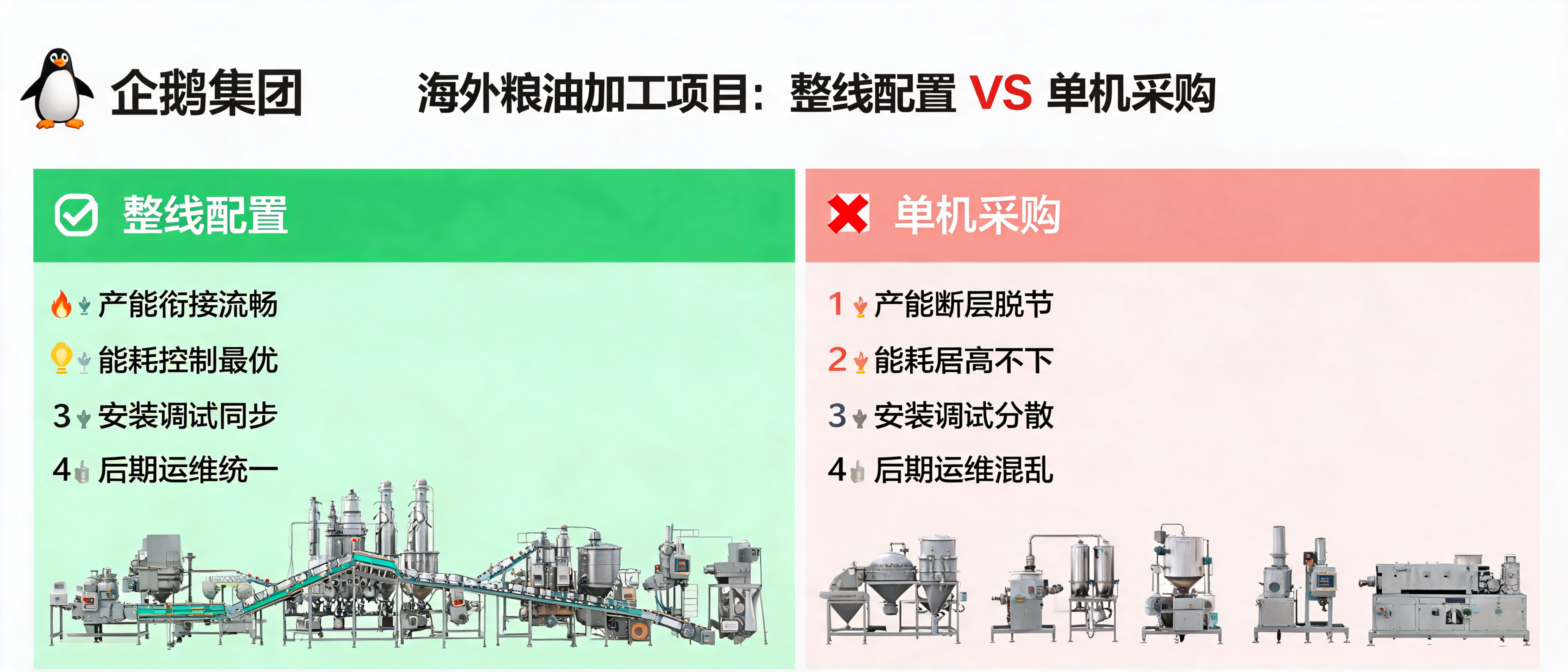
Oil processing equipment is commonly configured around three connected stages: pressing, solvent extraction, and refining. Not every project requires all three stages, but understanding their different roles helps project teams build a production line that fits their raw material and market objectives.
Oil pressing mechanically separates oil from oil-bearing materials. It is often selected for projects processing seeds, kernels, or other feedstocks where a mechanical extraction route is suitable. Cold-pressing and hot-pressing approaches may be considered according to the raw material characteristics and desired product positioning.
Vegetable oil solvent extraction equipment is typically evaluated when a project requires an extraction process for suitable oil-bearing materials. This stage requires careful planning for process integration, site conditions, safety management, and environmental requirements.
Refining processes crude oil into a product designed to meet the intended quality and market requirements. The refining solution should be selected according to the crude oil condition, target product, capacity, utility availability, and level of automation required.
A suitable equipment configuration is not defined by capacity alone. The following considerations provide a practical framework for comparing oil pressing production lines, extraction systems, and edible oil refining equipment.
| Selection Factor | Questions to Evaluate | Equipment Planning Impact |
|---|---|---|
| Feedstock | What oil-bearing material will be processed? What are its handling and processing characteristics? | Influences the choice of pressing, extraction, pretreatment, and refining route. |
| Processing Capacity | What daily throughput is required now, and is future expansion expected? | Determines equipment scale, layout, utility demand, and operational arrangement. |
| Product Positioning | Is the output intended as crude oil, refined edible oil, or a product with specific market requirements? | Defines the necessary refining scope and process control requirements. |
| Automation Level | How much manual operation is acceptable? What staffing level is available? | Guides the selection of electrical controls, PLC systems, and operating interfaces. |
| Utilities and Site Conditions | What voltage, steam, water, space, and local infrastructure conditions are available? | Affects equipment compatibility, installation planning, and operating continuity. |
| Environmental Requirements | What local requirements apply to production operations and process management? | Should be considered early in the process route and plant configuration. |
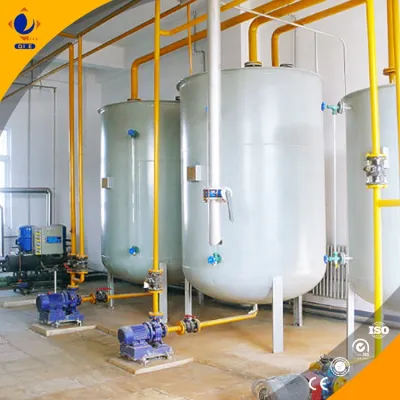
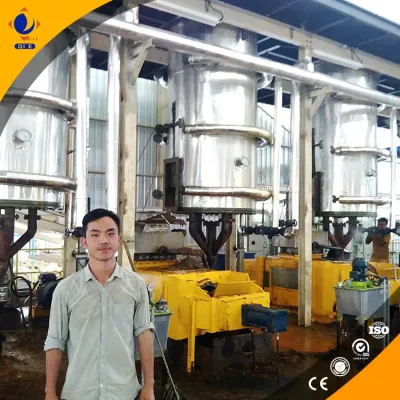
For palm oil processors that need a compact refining solution, a small-scale plant can provide a practical route between crude oil handling and refined oil production. Qi'e Group offers a 1–50 TPD small palm oil refining plant designed for refining requirements from 1 to 50 tons of crude oil per day.
This configuration is intended for small and medium-sized processing businesses and farms, including projects that require adaptable capacity planning and operational simplicity. It incorporates cold-pressing and hot-pressing process options described for palm oil processing applications.

The small palm oil refining plant is configured around the needs of operators seeking manageable production capacity, automated control, and compatibility with different regional power standards. Final project planning should still be based on the specific crude oil condition, local utilities, plant layout, and production objective.
Designed for palm oil refining requirements from 1 to 50 TPD, supporting small and medium-scale processing plans.
A PLC electrical control system supports automated operation. The stated production process can be operated by 2–3 people.
The equipment supports a voltage range of 230V–430V, helping accommodate different regional electrical standards.
Specified steam consumption is less than 300 kg per ton of oil, while soft water consumption is approximately 160 kg per hour.
Qi'e Group provides equipment and project configuration support for businesses planning oil pressing, vegetable oil solvent extraction, and edible oil refining operations. The company’s product range includes oil pressing equipment, oil production line equipment, and refining equipment for oil processing projects in Asia, Africa, South America, and other markets.
For a palm oil project, early discussion of daily capacity, crude oil source, desired automation level, voltage conditions, and site utilities can help establish whether a 1–50 TPD small palm oil refining plant is an appropriate starting point and how it should be integrated into the wider processing line.

 77
|
 Qi'e Grain and Oil Machinery Co., Ltd. edible oil project delivery oil processing equipment installation and commissioning complete oil processing solution oil mill technical service
424
|
Qi'e Grain and Oil Machinery Co., Ltd. oil press procurement parameters edible oil equipment evaluation oil processing equipment capacity oil press after-sales service
127
|
Qi'e Grain and Oil Machinery edible oil processing equipment oil pressing equipment oil solvent extraction equipment edible oil refining equipment
173
|
Qi'e Grain and Oil Machinery Co., Ltd. grain and oil machinery oil pressing production line edible oil refining equipment mini palm oil refining equipment
 321
|
Qi'e Grain and Oil Machinery Co., Ltd. edible oil production line oil pressing equipment oil refining equipment palm oil refining plant