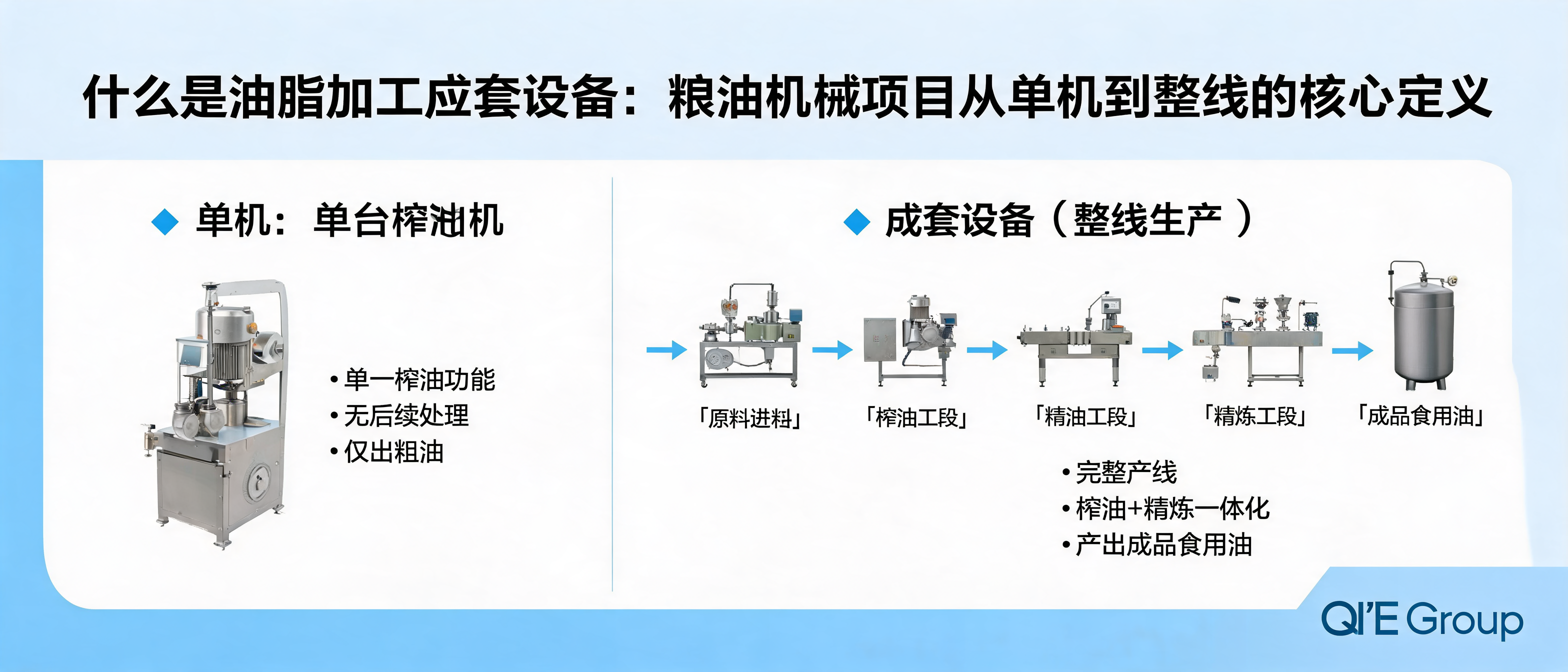
Edible oil production line equipment refers to the connected machinery and control systems used to process oil-bearing materials into refined edible oil. Depending on the raw material, target capacity, and required product quality, a project may combine oil pressing, crude oil handling, refining, and supporting utility systems into one coordinated processing flow.
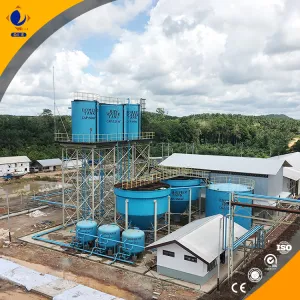
Qi'e Grain and Oil Machinery Co., Ltd. designs and supplies oil pressing equipment, oil processing line equipment, and edible oil refining equipment for B2B processing projects. For small and medium palm oil operations, the 1–50 TPD small palm oil refinery provides a practical refining option for processing crude palm oil at capacities aligned with farm and growing enterprise requirements.
An edible oil production line is not a single machine. It is a process-based equipment configuration in which each stage supports the next. The specific flow depends on the oilseed or oil-bearing material, the condition of the crude oil, local utilities, production capacity, and the intended market.
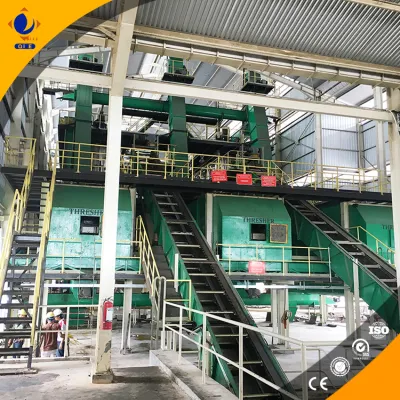
Oil-bearing raw materials are mechanically processed to obtain crude oil. Pressing configuration is selected according to the material and project conditions.
Crude oil is handled as part of the overall production flow before or alongside downstream refining requirements.
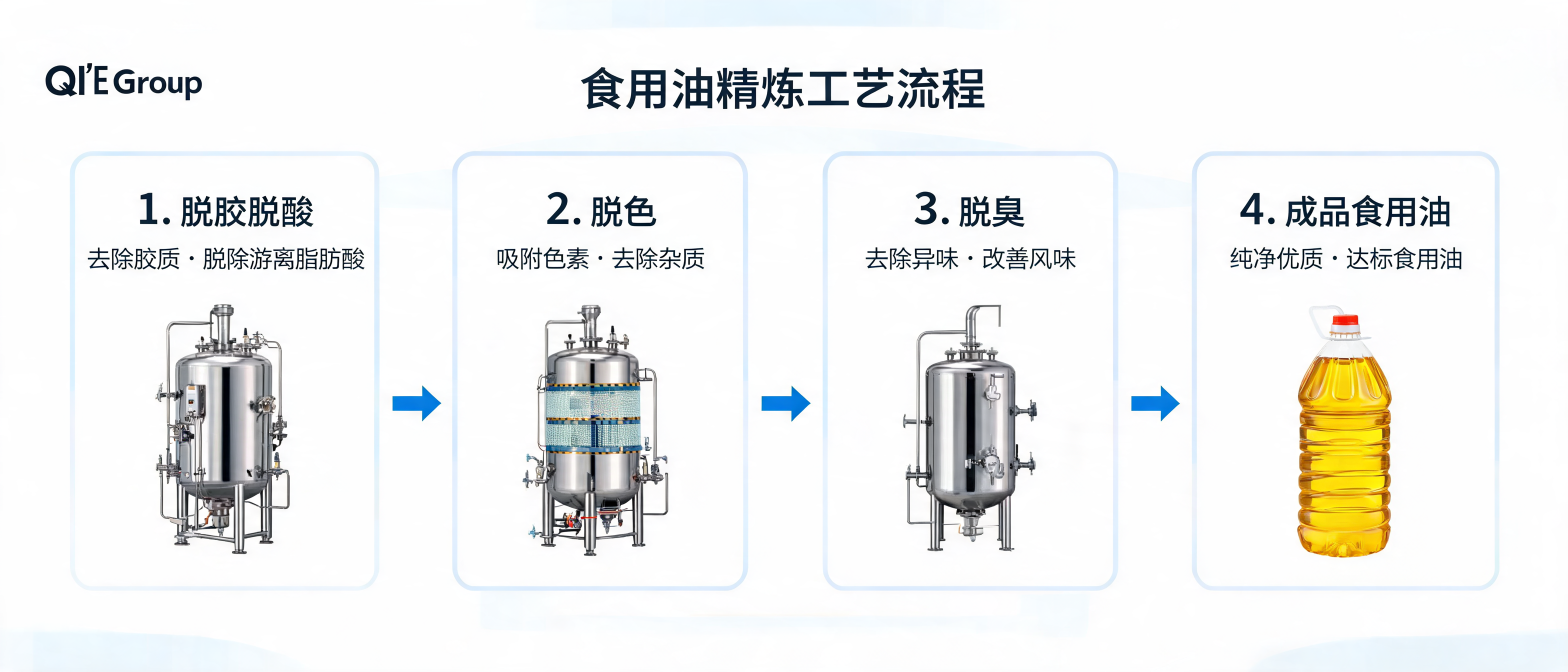
Refining equipment is used to support the production of purified edible oil, with the process arranged around crude oil characteristics and required operating capacity.
The Qi'e 1–50 TPD small palm oil refinery is designed for crude palm oil refining needs in the range of 1 to 50 tonnes per day. It is intended for small and medium production enterprises and farms seeking a compact refining solution, including projects evaluating palm oil processing opportunities in Nigeria and other markets with similar operational requirements.
The equipment incorporates cold-pressing and hot-pressing process approaches described for the product configuration, with a focus on supporting palm oil purity and quality during refining. Rather than applying a one-size-fits-all arrangement, capacity, electrical conditions, and customization needs should be reviewed as part of project planning.
Choosing edible oil production line equipment begins with defining the process boundary. A refining system should be evaluated not only by nominal daily capacity, but also by the characteristics of the incoming oil and the practical conditions at the installation site.
| Evaluation Item | Why It Matters |
|---|---|
| Raw material and crude oil condition | The oil source and crude oil condition influence the appropriate processing and refining arrangement. |
| Planned throughput | Capacity selection should match current production needs and the project’s operating plan. |
| Automation and staffing | PLC-controlled operation can help organize routine production tasks and staffing arrangements. |
| Steam, water, and power supply | Available utilities should be checked early to support compatible equipment configuration and installation planning. |
| Local project requirements | Voltage range, branding needs, packaging requirements, and site conditions may require a tailored solution. |
For a complete edible oil project, oil pressing equipment and oil refining equipment should be considered as connected parts of an oil processing flow. The right configuration depends on whether the project starts with raw oil-bearing materials, handles purchased crude oil, or combines pressing and refining in one operation.
Project focus: define the raw material, daily processing capacity, utility conditions, automation preference, and final product objective before confirming an edible oil production line configuration.
Qi'e Grain and Oil Machinery Co., Ltd. focuses on the research, production, sales, and service of grain and oil machinery, including oil pressing machinery, oil production line equipment, and edible oil refining systems. The company supports customers with equipment-oriented solutions that can include design, installation, and technical service considerations.
For palm oil projects requiring a 1–50 TPD refining capacity, the small palm oil refinery can be assessed alongside site utilities, operating expectations, and customization requirements to determine a suitable equipment solution.

 424
|
 Qi'e Grain and Oil Machinery Co., Ltd. oil press procurement parameters edible oil equipment evaluation oil processing equipment capacity oil press after-sales service
 129
|
palm oil refining equipment core components high-load continuous operation motor selection criteria pump seal materials bearing fatigue strength
40
|
Qi'e Grain and Oil Machinery cold press oil machine screw oil press vegetable oil solvent extraction equipment oil processing equipment selection
353
|
Qi'e Grain and Oil Machinery Co., Ltd. equipment + service grain and oil processing project integrated solution long-term cost control
 173
|
palm oil refining motor selection palm oil equipment cooling optimization automated palm oil refining equipment fault diagnosis high-load continuous operation