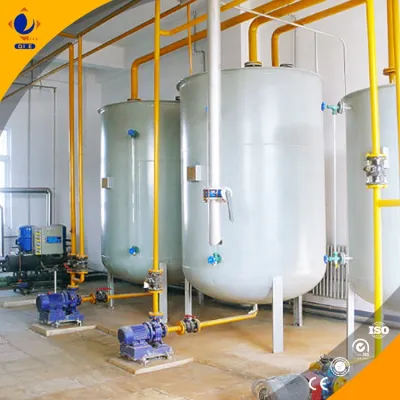
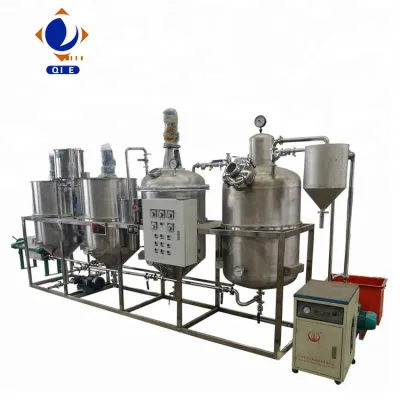
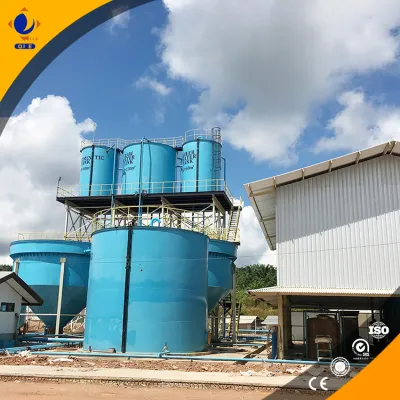
Selecting edible oil processing equipment requires more than choosing a single machine. A practical processing line should match the oilseed material, intended capacity, processing method, utilities, and finished-oil market position. QI'E Group supports oil processing businesses with equipment and integrated solutions covering oil pressing, vegetable oil solvent extraction, and edible oil refining.
For palm oil projects, the selection process should also consider crude oil quality, local power conditions, operating workforce, and the level of automation required. These factors help define a stable, suitable route from raw material handling to refined edible oil.
An edible oil plant is generally planned around one or more connected stages. The appropriate configuration depends on the raw material and the production objective. Pressing, solvent extraction, and refining serve different roles and should be evaluated as a coordinated system rather than as isolated equipment purchases.
Oil pressing equipment is used where mechanical extraction is appropriate for the selected oilseed and production plan. The choice should consider feedstock condition, desired throughput, and whether the operation uses a cold-press or heat-assisted process.
Vegetable oil solvent extraction equipment may be considered when the planned process requires an extraction stage. Equipment planning should include process integration, operational management, and site-specific requirements.
Edible oil refining equipment supports the processing of crude oil toward the intended finished-oil quality and product positioning. Refining capacity should be aligned with the actual crude-oil supply and downstream sales plan.
| Selection Factor | What to Assess | Planning Relevance |
|---|---|---|
| Oilseed or crude oil type | Material characteristics, crude-oil condition, and the intended processing route. | Determines whether pressing, extraction, refining, or a combined line is needed. |
| Required capacity | Daily processing target, available raw materials, and expected production continuity. | Helps avoid selecting equipment that is mismatched to the operation’s actual scale. |
| Finished-oil positioning | Target product quality, market expectations, and packaging or distribution plans. | Guides refining and process-control requirements. |
| Utilities and site conditions | Power standard, water and steam availability, installation space, and local operating conditions. | Ensures the line is compatible with the intended project location. |
| Operation and automation | Available workforce, operator experience, and desired control method. | Supports a practical balance between operating simplicity and process management. |

For small and medium-sized palm oil processors and farms, QI'E Group offers a 1–50 TPD small palm oil refining plant designed for crude-oil refining needs within this capacity range. The configuration was introduced for the Nigerian market and can be considered for projects requiring adaptable power compatibility and a compact operating model.
Equipment selection is most effective when process requirements, capacity, utilities, and finished-oil objectives are assessed together. QI'E Group combines oil pressing equipment, oil production line equipment, and edible oil refining equipment with design, installation, and technical service support for B2B processing projects.

 416
|
 Qi'e Grain and Oil Machinery Co., Ltd. edible oil processing production line oil pressing equipment edible oil refining equipment oilseed processing process
 461
|
Qi'e Grain and Oil Machinery Co., Ltd. grain and oil machinery complete solution oil pressing equipment refining equipment
 254
|
palm oil physical fractionation palm stearin purity improvement fat crystallization control oil filtration separation fractionation process optimization
448
|
Qi'e Grain and Oil Machinery grain and oil processing equipment project oil production line installation equipment commissioning service oil mill technical support
 48
|
plant oil fractionation equipment selection cooling crystallization process centrifugal separation technology solvent recovery system fractionation troubleshooting