How to Choose an Edible Oil Processing Line for Your Capacity and Feedstock
2026-09-22
Qi'e Grain and Oil Machinery Co., Ltd.
Industry Guide
Qi'e Group explains how to select an edible oil processing line based on feedstock, capacity, pressing or extraction process, refining needs, automation, environmental requirements, and technical support.

Choosing an edible oil processing line starts with a clear match between the raw material, planned throughput, product requirements, available utilities, and operating model. A suitable line is not simply the largest or most automated option; it is a coordinated system for receiving and preparing oilseeds, recovering oil, refining crude oil when required, and supporting stable day-to-day production.
Qi'e Grain and Oil Machinery Co., Ltd. supports B2B processors with oil pressing equipment, oil production line equipment, and edible oil refining equipment. This guide outlines the practical decisions that help investors, farms, and processing businesses evaluate an edible oil processing line for soybean, palm kernel, palm oil, and other vegetable oil projects.
Start with Feedstock and Product Objectives
The feedstock determines the basic process route and the equipment configuration. Different oil-bearing materials have different physical properties, oil content, preparation requirements, and processing characteristics. Before selecting oil pressing equipment, solvent extraction equipment, or edible oil refining equipment, define the material to be processed and the intended oil product.
Feedstock characteristics
Confirm whether the project will process soybeans, palm kernels, crude palm oil, or another vegetable oil feedstock. Preparation, pressing, extraction, and refining requirements should be assessed according to the selected material.
Finished oil target
Determine whether the objective is crude oil production, refined edible oil, or a processing line that can be expanded as market requirements change. The target product influences the need for refining stages and control systems.
Local operating conditions
Site layout, power standards, water availability, steam requirements, labor resources, and local compliance expectations should be considered before the equipment specification is finalized.
Match Processing Capacity to the Business Plan
Capacity should reflect the expected raw material supply, production schedule, storage capability, workforce, and sales plan. Selecting capacity only on the basis of maximum output can create unnecessary pressure on utilities, operating costs, or material procurement. Conversely, undersized equipment can restrict future production.
| Planning factor |
Questions to evaluate |
Why it matters |
| Daily throughput |
How many tonnes of material or crude oil should be processed each day? |
Sets the scale of core processing and auxiliary equipment. |
| Operating schedule |
Will the facility run one shift, multiple shifts, or according to seasonal supply? |
Helps align output expectations with practical operating time. |
| Expansion planning |
Is future capacity growth anticipated? |
Supports a layout and equipment plan that can accommodate later development. |
Choose the Appropriate Oil Recovery Route
Oil recovery is generally planned around pressing, solvent extraction, or a combination of processes. The preferred route depends on feedstock characteristics, production goals, plant scale, and the intended relationship between oil recovery and downstream refining.
Oil Pressing Equipment
Oil pressing equipment is considered when the production plan is based on mechanical oil recovery. Equipment selection should account for the material preparation process, required capacity, and the desired integration with filtering or refining stages.
Solvent Extraction Equipment
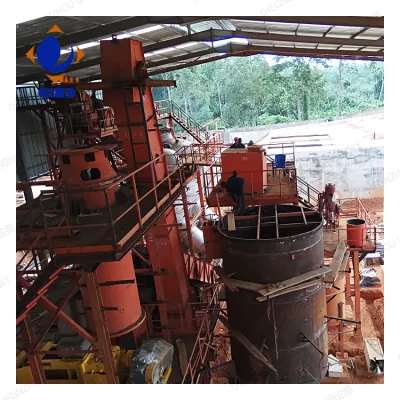
Vegetable oil solvent extraction equipment may be evaluated for projects that require an extraction-based process route. The decision should include a careful review of process configuration, operating controls, site conditions, and environmental management requirements.
Integrated Processing Line
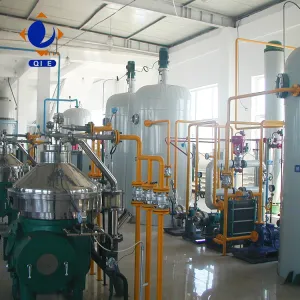
An integrated edible oil processing line coordinates preparation, oil recovery, refining, and related process sections. This approach helps align equipment interfaces and gives the project a clearer basis for installation and technical service planning.
Define the Refining Requirement Early
Edible oil refining equipment should be selected according to the condition of the crude oil and the required finished-oil specification. Refining is a dedicated part of the overall oil processing line, so it should be planned together with upstream production capacity, utility availability, automation needs, and the plant layout.
- Crude oil source: Identify whether crude oil comes from an in-house pressing or extraction process, or from external supply.
- Production scale: Ensure the refinery capacity is compatible with the expected crude oil volume.
- Utility planning: Review the requirements for electricity, steam, water, and associated process support.
- Control and operation: Select a level of automation that matches the available operating team and desired production management approach.
A Practical Option for Smaller Palm Oil Refining Operations
For smaller palm oil refining projects, Qi'e Group offers a 1–50 TPD small palm oil refining plant developed for crude oil refining needs within this capacity range. It is positioned for small and medium-sized production businesses and farms, including projects serving the Nigerian palm oil market.
| Configured consideration |
Available product information |
Project relevance |
| Refining capacity |
1–50 TPD crude oil refining requirement |
Supports capacity planning for smaller-scale palm oil refining operations. |
| Control system |
PLC electrical control system for automated operation |
The stated configuration enables the production process to be operated by 2–3 people. |
| Power compatibility |
Voltage range of 230V–430V |
Helps address different regional power standards during project planning. |
| Utility reference |
Steam consumption below 300 kg per tonne of oil; soft water consumption approximately 160 kg per hour |
Provides reference points for evaluating operating utilities. |
| Customization |
Logo, packaging, and graphic design customization options |
Allows the equipment presentation to be adapted to individual project needs. |
The equipment description also states that core components use high-grade materials and that a two-year warranty is provided for core components of the complete unit.
Evaluate Automation, Utilities, and Environmental Considerations Together
Automation should be selected as part of the total processing strategy. PLC-based control can simplify operating procedures and support more consistent process management, but the final automation level should remain appropriate for the plant scale, local technical resources, and maintenance plan.
Planning principle: Evaluate equipment, utilities, environmental requirements, and technical service as connected parts of one edible oil processing project. A line is easier to operate and maintain when these decisions are made before installation rather than after equipment delivery.
Use a Clear Selection Checklist
- Confirm the feedstock: Define the oilseed, kernel, crude oil, or vegetable oil material to be processed.
- Set the required capacity: Base throughput on available raw materials and the actual production schedule.
- Select the process route: Review pressing, solvent extraction, refining, or integrated line requirements.
- Check site readiness: Assess space, electricity, voltage, water, steam, and supporting infrastructure.
- Determine the control level: Match automation and staffing requirements to the operating plan.
- Plan service support: Include equipment design, installation coordination, and technical service in the project evaluation.
Plan Your Processing Line with the Right Information
Qi'e Group combines equipment manufacturing with design, installation, and technical service support for oil pressing, oil production, and edible oil refining projects. For a more relevant equipment recommendation, prepare the feedstock type, target capacity, desired process route, site utilities, local voltage standard, and finished-oil requirements before discussing your project configuration.