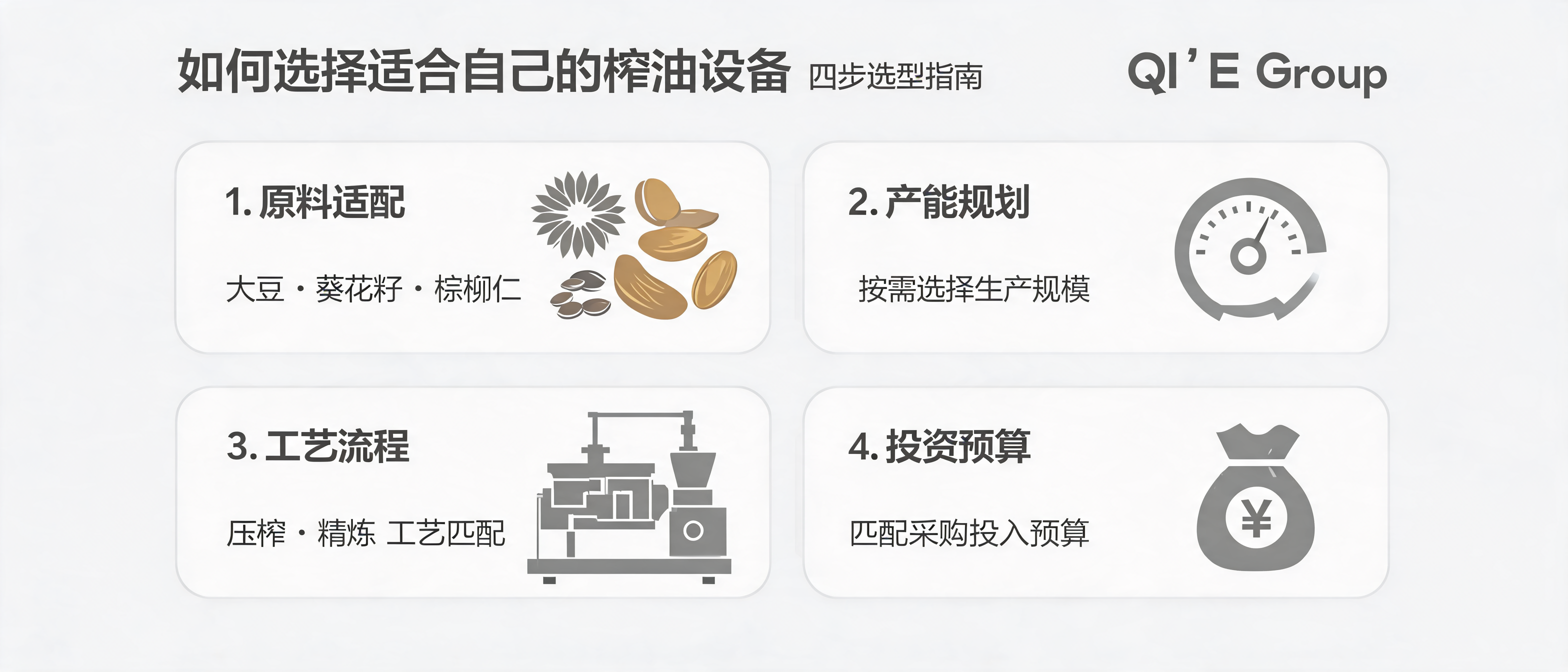
Selecting edible oil processing equipment starts with a clear match between the raw material, required processing capacity, target oil quality, available utilities, and operating model. A well-configured line helps processors avoid unnecessary investment while maintaining practical operation, consistent process control, and room for future development.
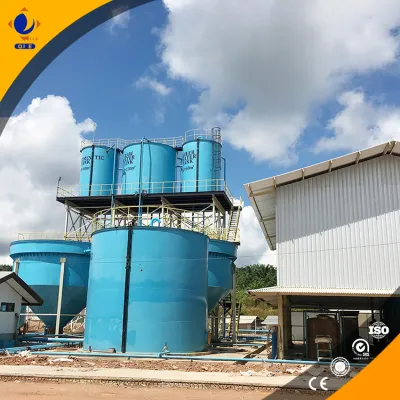
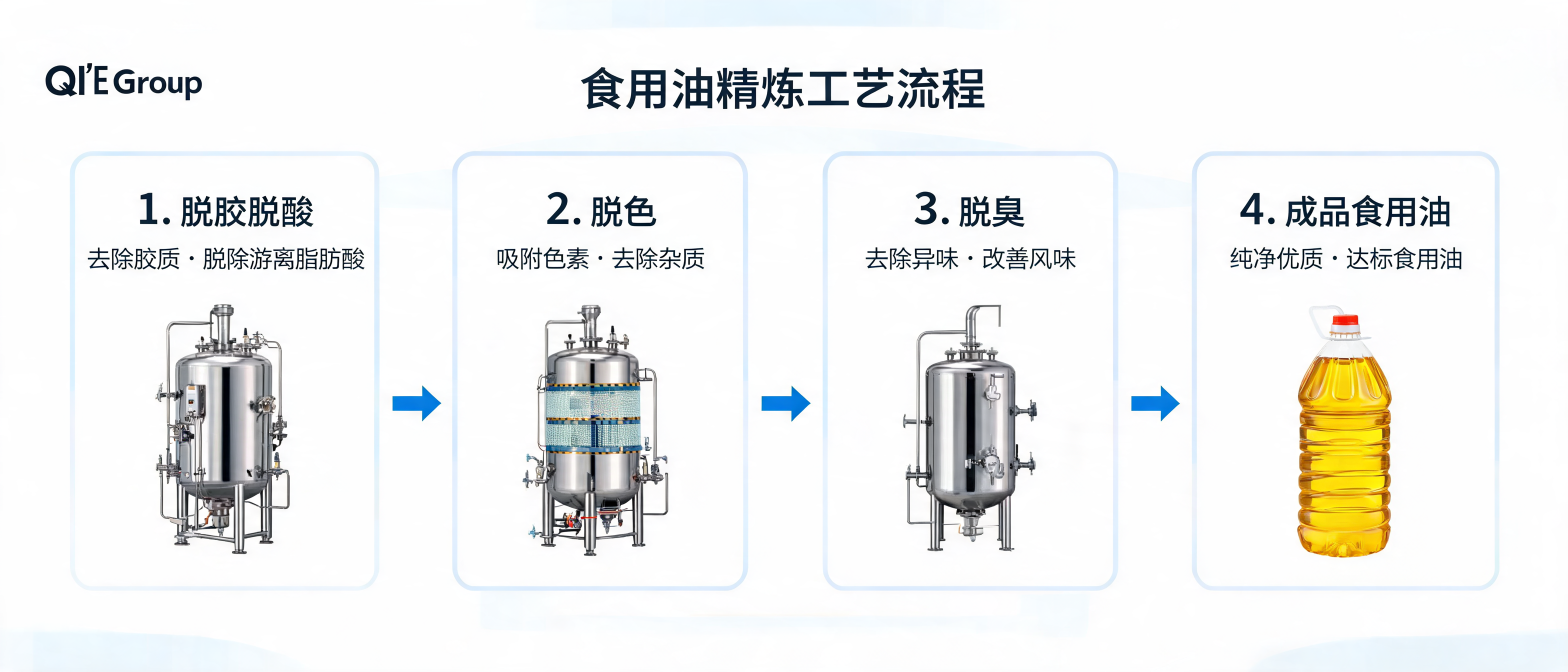
QI'E Group supports oilseed processors, farms, and food production businesses with oil pressing equipment, oil production line equipment, and edible oil refining systems. For small and medium-scale palm oil projects, the 1–50 TPD small palm oil refinery provides a flexible refining option with PLC-controlled operation and configuration support for different regional power standards.
Different oil-bearing materials require different preparation, extraction, and refining considerations. Palm oil projects should define whether the requirement is focused on crude oil refining, integrated oil processing, or a broader production line that includes upstream pressing or extraction equipment. The intended finished-oil application also affects the process configuration.
Assess oil type, crude oil condition, impurities, moisture, and the expected feed consistency before determining the appropriate refining process and auxiliary equipment.
Clarify the desired level of purification, product positioning, and operational requirements so that pressing, extraction, refining, and control functions can be evaluated together.
Determine whether the project needs a standalone refinery or a coordinated solution that connects with oil pressing, solvent extraction, storage, and downstream handling systems.
Capacity selection should reflect realistic supply, production schedules, labor availability, utility conditions, and anticipated sales volume. Choosing a capacity that is too small may limit production planning, while an oversized configuration can increase initial investment and operating complexity.
| Selection Factor | What to Review Before Configuration |
|---|---|
| Daily throughput | Required processing volume, operating shifts, and the continuity of crude oil supply. |
| Growth planning | Whether the facility should allow for later expansion, additional process modules, or production line integration. |
| Plant resources | Available space, electrical supply, water, steam, installation access, and operator resources. |
| Operating economy | Expected utility consumption and the practical cost of daily operation and maintenance. |
Edible oil processing equipment should not be selected as isolated machines. The upstream oil recovery method and the downstream refining requirement must work together. Depending on the project, this may involve oil pressing equipment, solvent extraction systems, refining equipment, and supporting conveying or storage arrangements.
QI'E Group’s 1–50 TPD small palm oil refinery is designed for refining requirements from 1 to 50 tons of crude oil per day. It is intended for small and medium-sized production businesses and farm-related processing projects that require a practical refining capacity and a manageable operating arrangement.
The equipment can also be supplied with customized logo, packaging, and graphic design options where required. Final configuration should be confirmed according to local site conditions, electrical standards, production goals, and the applicable process plan.
Automation is most effective when it fits the available workforce and the operating environment. PLC-controlled equipment can help standardize routine operation, but the plant should still be planned around operator training, process supervision, utility stability, and maintenance access.
The right edible oil processing equipment is a balanced decision involving raw materials, capacity, processing method, refining needs, automation, utilities, and long-term service considerations. QI'E Group provides equipment and solution support across oil pressing, production line, and edible oil refining applications, helping B2B customers evaluate a configuration that is appropriate for their project conditions. For palm oil refining projects in the 1–50 TPD range, our technical team can discuss suitable equipment arrangements based on your feedstock, site, and operating requirements.

 424
|
 Qi'e Grain and Oil Machinery Co., Ltd. oil press procurement parameters edible oil equipment evaluation oil processing equipment capacity oil press after-sales service
213
|
Qi'e Grain and Oil Machinery grain and oil machinery market regional demand trends equipment export overseas market expansion
356
|
Qi'e Grain and Oil Machinery Co., Ltd. automatic oil press oil press procurement small oil mill oil press technical parameters
366
|
Qi'e Group grain and oil machinery equipment oil pressing equipment edible oil production line edible oil refining equipment
332
|
Qi'e Grain and Oil Machinery Co., Ltd. grain and oil processing equipment oil pressing equipment edible oil production line edible oil refining equipment